



Shaped by the Current

In Helena, Montana, the Wall Family leads Power Townsend Company with a consultative approach rooted in history and focused on supporting projects from start to finish shows us how to compete with big box hardware stores.
Power Townsend Company in Helena moves through Montana’s story like a river flows through the landscapes of Big Sky Country.
You can trace where a river has been by the ground it shaped long ago—former beds, worn banks and the channels that once carried freight and life across the territory. Hardware Connection Century Club member Power Townsend has left a similar historic imprint. Founded in 1867 at Fort Benton—before Montana achieved statehood and when steamboats carried goods up the Missouri River—the business began as part of a supply network that stretched across Montana and north into Canada. That system connected settlements through trading posts and stores positioned along emerging communities.
Over time, that current carried the company inland. The course of the business shifted as markets changed, and the Wall family became part of that flow when Mike Wall’s grandfather joined the company in 1920. In 1942, the family acquired the operation and continued guiding its path through decades of transition.
Today, that course runs through Helena, the state capital.
Like a river that settles into a valley and begins shaping what grows along its banks, Power Townsend has cultivated its customer base through a consultative approach. Contractors and homeowners enter with plans and move through the store with guidance across project stages—from structural materials to finishing selections.

The Flow of the Build
Power Townsend built its reputation by staying involved in a project from start to finish.
Contractors walk in with plans and begin by sourcing materials tied to the build. As those jobs progress, the conversations shift along with the work. Rather than customers seeking answers elsewhere, the process continues inside the store. Along the way, customers work with multiple Power Townsend team members who specialize in different aspects of the process, each stepping in where their knowledge applies, including paint, lighting and finish selections. And contractors regularly bring homeowners back to make choices on cabinetry, flooring, appliances and fixtures.
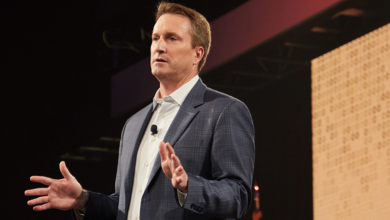
“We get more face time with the customers and help them choose the décor they want,” Wall says. “We’re really part of a contractor’s team as we help customers and guide the project.”
That continuity keeps early material decisions tied to the finishes that follow, allowing projects to move forward with alignment from one phase to the next. Over time, this consultative approach—in which the store helps interpret plans and guide selections—has shaped how Power Townsend operates, supporting builds from the first materials through the choices that complete them.

A Cooperative Connection
Supporting that level of customer involvement requires access to product and planning resources that align with the way projects move through the store.
Power Townsend’s affiliation with Do it Best dates to 1998, when the cooperative merged with Minnesota-based Our Own Hardware, bringing the Helena retailer into the network. (“That was a great move,” Wall says.) Ever since, the relationship has played a role in how the store sources inventory, plans its floor space and expands into new categories.
Operating in a geographically remote market places added importance on steady supply, Wall says. Power Townsend receives two deliveries each week through the cooperative’s distribution system, enabling the store to maintain the range of materials and finishes that support contractor-driven projects.

“They get the price right on merchandise and get us merchandise,” Wall says.
The relationship with the co-op also influenced the development of the store’s design center. During its planning phase, Do it Best’s design team worked alongside Power Townsend for nearly a year, helping determine how cabinetry, appliances and décor categories would be organized and integrated.
Buying decisions continue to be shaped through market shows, where Wall and his team evaluate products in person and speak directly with vendors about sourcing and fit within their operation. Through these ongoing connections, Power Townsend aligns its inventory and merchandising decisions with the needs of contractors and homeowners working through longer-term builds.

Today’s Operation, Tomorrow’s Capacity
Power Townsend’s Helena operation functions as a working yard and retail environment built around project flow that supports sales across departments.
The 70,000-square-foot facility sits on a 25-acre site that supports walk-in traffic and contractor activity. Drive-through access allows builders to load materials directly, while indoor departments coordinate across lumber, electrical, paint and finishing categories. Multiple specialists operate within each area, stepping into conversations as projects progress and different expertise becomes relevant.
The business maintains approximately 4,000 active accounts, with a core group of contractors driving a significant share of project activity. Relationships often extend beyond material sourcing, including coordination around timelines and, in some cases, financial support tied to construction. “There have been times we’ll finance construction and pay subcontractors until they sell the house,” Wall says.
At any given time, the company may work with as few as five or as many as 40 contractors through such arrangements, supporting project continuity as homes move toward completion.
Looking ahead, Power Townsend is preparing for additional growth tied to housing development in the region. Recent land acquisition provides capacity for unloading railcars and supports plans for future truss and wall panel production in East Helena. The expansion would be paired with a smaller retail presence designed to serve new construction activity in that area. The move aligns with broader regional trends—recent Census estimates show Helena added about 360 residents between 2023 and 2024, while neighboring East Helena recorded growth rates above 5 percent, making it one of Montana’s faster-growing small communities.
As new homes continue to be built, the company’s focus remains on aligning its facilities and services with the needs of builders throughout the region. Like a river that shifts course as the landscape changes, Power Townsend continues to move with the needs of the market it serves—steady in its direction and mindful of what it carries forward after more than 150 years in business.
“No pressure,” Wall says with a smile, “but we want to keep the business, so we change with the times.”
10 Design Center Tips from Power Townsend on How to Compete with Big Box Hardware Stores
Power Townsend’s 10,000-square-foot design center, added during a 2010 remodel, brings cabinetry, flooring, appliances and lighting together in one dedicated space. The addition reflects a shift toward supporting projects beyond materials, giving contractors and homeowners a place to make finish selections as part of the building process rather than elsewhere.
Here are pointers Power Townsend owner Mike Wall shares with other home improvement retailers who may be exploring adding a design center.
- Begin with cabinetry and vanities before expanding categories.
- Flooring is a natural next step in décor offerings.
- Expand displays gradually (Power Townsend grew from 16 feet to 60 feet of appliances).
- Position the showroom to be visible from the store entrance to increase engagement.
- Provide touch-and-feel displays.
- Use design software such as 2020 Design for cabinetry layouts.
- Include knobs, countertops and lighting to complete selections.
- Staff relatability supports décor decision making.
- Encourage contractor participation in customer selections.
- Treat the space as a collaboration environment for project decisions.