
Discipline Behind the Assortment — Q&A with Justin Hanford, VP of Merchandising at Do it Best

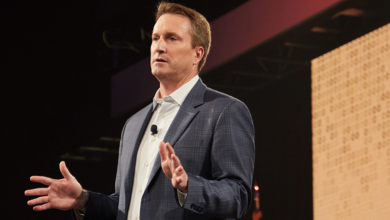
Justin Hanford, vice president of merchandising at Do it Best, helps guide product strategy, vendor relationships and category planning for Do it Best and True Value.
From pre-buy strategy to repair and maintenance categories, Do it Best’s Justin Hanford explains how merchandising decisions are evolving in a combined Do it Best/True Value landscape.
Justin Hanford is vice president of merchandising for Do it Best, overseeing product assortments, vendor relationships and category strategy across both Do it Best and True Value. A longtime member of the Do it Best team, Hanford has held a range of merchandising and category leadership roles during his career and has been closely involved in guiding the cooperative through a period of significant change, including the integration of True Value and the launch of combined Markets. He holds degrees in business management and marketing from Indiana University and an MBA from Saint Francis University.
In his role, Hanford focuses on building assortments that reflect how independent hardware store owners actually buy, merchandise and serve customers. That perspective has been central to planning the first combined Do it Best/True Value Markets, aligning two retailer bases and identifying areas where data, scale and operational discipline can create quiet but meaningful opportunities. In the following exclusive Q&A, Hanford shares lessons from the Markets, insights into category strategy and sourcing, and his outlook on how independent retailers can make smarter buying decisions in the years ahead.
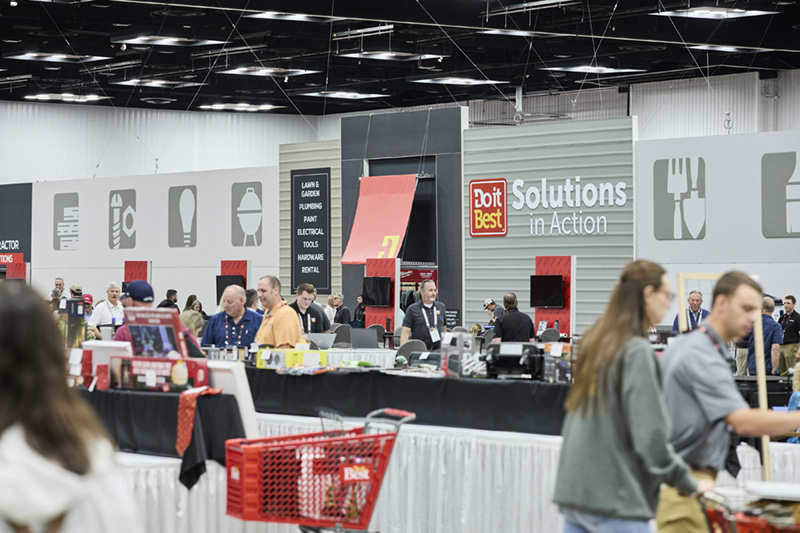
At the Do it Best/True Value Market, the Solutions in Action area connects retailers with programs focused on pre-buy strategy, assortment discipline and category planning—tools designed to help stores improve turns, margins and seasonal readiness.
Hardware Connection: From your perspective, what were the hardest parts of pulling off the first combined Do it Best/True Value Markets—and what ended up going better than expected?
Justin Hanford: Reflecting on that first integrated market in the spring of 2025, the decision to host it was the easy part. The biggest hurdle was the tight timeline. With the True Value acquisition closing in late November 2024, we were already weeks behind the work required to execute an event of that scale.
The hard part was everything that followed: getting vendors set up, securing additional convention center space, rebuilding the floor layout, reserving more hotel blocks, onboarding thousands of SKUs and ensuring each dealer base could quickly find their core categories without having to relearn how to shop a Market.
Our second Market, in September 2025, was stronger because we had a more traditional planning window. What struck me at both events was the energy our retailers and vendors brought. Once the doors opened, the combined floor did not feel like two shows side by side—it felt like one unified Market designed around how independents buy. That outcome speaks to the dedication our team brings to hosting these events twice a year.
Can you share one behind-the-scenes decision during planning for the combined Markets where you weren’t sure how it would shake out, and what you learned from it?
One of the most challenging decisions revolved around physically accommodating the size of the combined Market. It was not simply a matter of doubling the number of vendors, since many vendors were already shared. But we had about 200 additional booths to place, plus expanded corporate exhibit space for programs, marketing and key retailer support functions. Very quickly, floor space became a premium.
After weighing several options, we decided to move some exhibits into meeting rooms adjacent to the main floor. It wasn’t ideal, and we weren’t sure how retailers or vendors would react, but it was the best way to honor our strategy without compromising the event. I am incredibly proud of how our team adapted. They found creative ways to make those spaces feel fully connected to the Market, and they never lost sight of what mattered to retailers.
What we learned is that transparency and intention matter more than perfect real estate. When retailers understand why decisions were made and see that the goal is to give them more access, more information and more opportunity, they respond positively.
Looking forward, our priority is to maximize Market floor space with as many vendor booths as possible. That allows retailers to discover more new products, learn directly from vendors and enhance their assortments. We will also continue to highlight store design options and branding strategies for both banners so retailers can visualize what makes the most sense for their business.
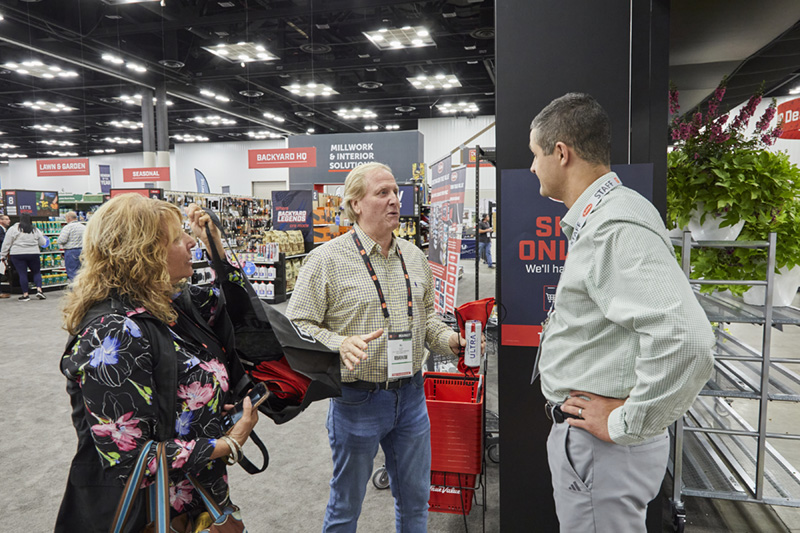
Hanford (right), speaking with retailers at a recent Do it Best/True Value Market, says tighter assortment discipline, pre-buy participation and smarter category planning can help independent hardware store owners build stronger baskets and improve turns.
In the coming year, what’s the biggest category of products that will be a “quiet opportunity” for retailers that might not be obvious on the surface?
I see meaningful opportunities in repair and maintenance consumables. Fasteners, adhesives and sealants, electrical fittings, plumbing repair kits and paint sundries all offer steady, repeatable basket-building business. These items may not be flashy, but they are reliable profit contributors often purchased by repeat shoppers.
With vendor optimization, smarter pricing, better pack-size discipline and targeted planogram improvements, retailers can drive higher margin and improved turns without adding a single square foot of space. The need is constant, and the opportunity is bigger than many realize.
From the member’s seat, assortment decisions can feel like a tug-of-war between breadth and simplicity. In your role, how do you decide when to add options and depth versus streamline?
It can be a tough balance because our retailers need the right options to serve their customers well. But every SKU must have a job. It has to bring traffic, expand margin, lift the basket or complete the project. If an item can’t clearly deliver on at least one of those roles, it becomes a candidate to exit.
Determining the strategy for the category will inform how we execute. We may need a good, better, best structure to meet customers’ needs in one category, or we can support them with just the opening price option in another. Determining whether national brands, exclusive brands or a mix play the right role is also critical.
The key is relying on retailer POS data and industry insights rather than assumptions. When we build assortments with clean data, the decisions become easier and more accurate. That discipline also creates room for us to introduce genuinely new items and categories that help our stores stand out and bring additional foot traffic.
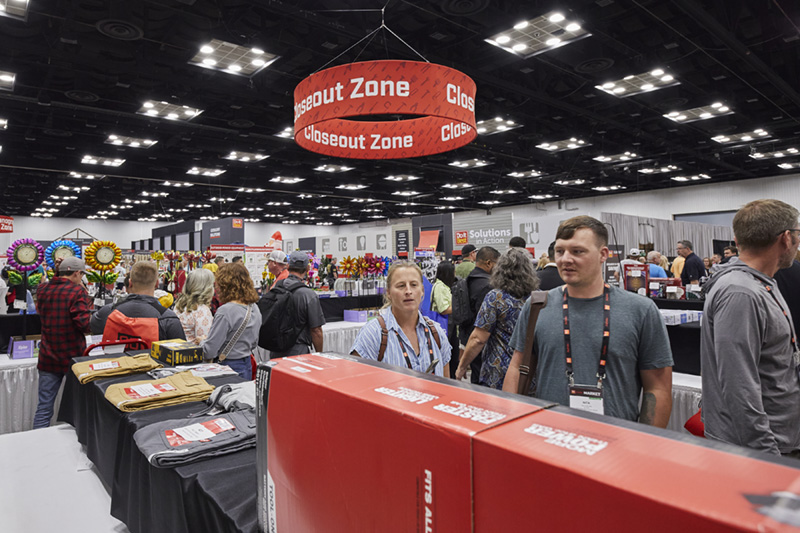
“Once the doors opened, the combined floor did not feel like two shows side by side—it felt like one unified Market designed around how independents buy,” says Justin Hanford, vice president of merchandising at Do it Best, reflecting on the first combined Do it Best/True Value Market.
Global sourcing is often invisible to retailers until something breaks. What’s one sourcing or availability lesson from the past couple years that has changed how you plan buys today?
The biggest lesson is the importance of building in time and flexibility to reduce risk. We build small, dynamic buffers for A movers and key seasonal items. We also buy earlier when shipping lane risks rise. We evaluate suppliers on resilience and consistency, not just cost. Lead-time variance, performance under stress and raw material exposure all matter.
The second lesson is the advantage of scale. With our combined purchasing power, we secure priority production, faster shipping schedules and better landed costs. In many cases, we can consolidate from two factories to one, delivering better pricing and improved service levels. That scale is a competitive advantage that not every distributor can match.
After a year of getting under the hood at True Value and closely examining its merchandising operations, what did you and your team learn about aligning two retailer bases with different habits, assortments and promotional expectations?
What stood out immediately was that both organizations were trying to accomplish the same goals for the same types of retailers but often using different technology and processes to get there. In many cases, the programs themselves were very similar but just called something different. That helped us see early on that alignment was achievable without reinventing everything.
We also saw that both merchandising teams were doing a lot of things very well. The opportunity was not to choose one way over the other, but to take the strongest elements from each approach and build them into our go-forward strategy. When you combine two companies of this size, the goal is not uniformity, but improvement.
At a retail level, the needs were far more aligned than different. Both brands sell similar products to similar customers. Whether it’s a Do it Best member or a True Value retailer, they want assortments that fit their business, competitive pricing and dependable support.
If you could ask independent hardware store owners for one behavioral change that would help them get more out of your programs, your pricing and your Markets—what would it be?
Take full advantage of our pre-buy opportunities. Participating in these programs does three important things: It increases our factory orders, which reduces the overall acquisition cost for all retailers. It allows us to manage demand during peak seasons much better. The more accurate we are, the better the distribution centers can plan inventory and stay in stock. It ensures retailers have critical seasonal items on shelves before customers start asking for them. Seasonal readiness is the first step to selling success.
Our pre-planners and promotional original merchandise orders are some of the best tools retailers have to win early and win big.