

LBM Products & Pro Trends: Retailers React to Changing Pro Expectations
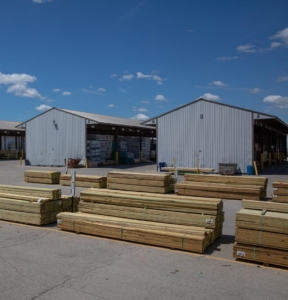
From after-hours ordering to delivery tracking and new building materials, hardware stores, home centers and lumberyards dealers are adapting to contractors who expect more.
It’s 8 p.m., and a contractor in northwest Indiana has wrapped up the jobsite for the day. But then he clocks in for the next part of his job: Organizing his business including placing orders for the next build. His lumber supplier closed hours ago. He could send an email and wait for someone to respond the next morning. Or he could place the order online and move on to the next task.
At PC Home Stores in Sellersburg, Indiana, more contractors are expecting online ordering and might even take their business elsewhere if they can’t order when convenient for them.
“The younger ones, we’ve actually got some who are already starting to use our website because it is more friendly to them,” says Jesse Isaacs of PC Home Stores. “In some cases they’re working on it at eight o’clock at night. They don’t want to wait for somebody to get back to them.”
Isaacs experience is a telling example of how the expectations of professional customers are changing. Across the country, building materials dealers are finding that contractors increasingly want faster transactions, greater visibility into orders and deliveries, and access to tools that make their work more efficient.
Yet, the changes aren’t uniform. Some contractors are embracing digital ordering and estimating software, while others continue to rely on established relationships and traditional methods. For independent dealers, the challenge is accommodating new expectations without losing the personal service that has helped them build their businesses.
The Bar Keeps Rising
At Hiwassee Builders Supply in Athens, Tennessee, owner Porter Clark sees a fundamental shift in what contractors expect from smaller LBM suppliers.
“The biggest change that they’re asking for is the ease of doing business,” Clark says. “They want you to fill your orders faster. They want to have more transparency about their sales. Having electronic images, having emailed invoices, having a good experience online is important now.”
Clark says contractors once accepted the limitations of smaller suppliers, particularly when it came to technology and customer-facing systems. That tolerance has diminished as national competitors have expanded their capabilities.
“Now they are demanding more, and the big-box stores, the big LBM yards, the nationals are able to deliver on a better customer experience,” he says. “And so we’re having to keep up. We’re having to compete in those new spaces.”
For Hiwassee, that has meant investing in technology and making order accuracy and fulfillment priorities. The company uses Epicor BisTrack and warehouse management software to support its operations.
“On-time and in-full delivery is a big priority of ours,” Clark says. “We can’t make mistakes. We have to step our game up because every day you’re competing for that customer.”
He believes technology gives smaller dealers the ability to meet those expectations, even as larger competitors continue to raise the standard.
“With technology you can compete, but there is a certain expectation that the bar has been raised,” Clark says.
Where’s My Delivery?
At PC Home Stores, one of the most noticeable changes involves something contractors have come to expect in their personal lives: knowing where an order is and when it has arrived, according to Isaacs.
The company has begun using BisTrack to provide delivery notifications and is considering live vehicle tracking, similar to what customers experience with major online retailers. Isaacs sees the appeal.
Earlier this year, PC Home Stores introduced another feature that has already made a difference: delivery photographs. Most customers now receive notifications that include pictures showing where their materials were delivered.
“That was a life changer for them because they were constantly asking, ‘Is my stuff there? Where is it? Where did you put it?’ ” Isaacs says. “And now with the delivery pictures, we’re not getting those questions as much anymore.”
The change illustrates how relatively straightforward technology can improve the customer experience while reducing the time employees spend answering routine questions.
Making Estimating Faster
Technology is also changing how PC Home Stores works with contractors before materials are ordered.
Isaacs says some customers are experimenting with their own material takeoffs or developing preliminary estimates. However, many still depend on the dealer to handle that work.
Meanwhile, some of the company’s younger salespeople have begun using estimating software to prepare takeoffs more efficiently.
“When they’ve been showing those results to customers, they’re starting to get some really good feedback,” Isaacs says. “The customers are far more impressed than we thought they would be.”
The software has also produced measurable time savings.
“We took it from a four-hour takeoff down to a one-hour takeoff,” Isaacs says.
He hopes contractors eventually become comfortable enough with the technology to handle more of the estimating process themselves, freeing employees for other work.
For now, the results demonstrate how digital tools can strengthen the dealer-contractor relationship by providing faster answers and more useful project information.
New Products, New Opportunities
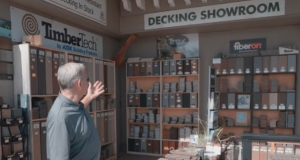
Not every change in contractor expectations involves software or delivery.
At O.K. Lumber Co. in San Carlos, California, chief operating officer Ken Arends says growing interest in composite building products is creating an opportunity to rethink how dealers present materials to customers.
The company is finishing a showroom designed to introduce contractors to newer composite siding options.
“We’re finishing up a showroom right now that is going to showcase all the new composite sidings,” Arends says. “I think we have 13 vendors that are involved, and each vendor gets a section of wall for their new products.”
The showroom will feature vendor displays and pricing information, allowing customers to compare products and make decisions more efficiently.
“We’re going to make it so the customer can see pricing right there on the wall,” Arends says. “So it’s a quick decision-making process.”
The investment is intended to meet growing contractor interest while opening another source of sales.
“We’re just trying to generate a new revenue stream and keep up with contractor demand,” Arends says. “They want to know more about these new composites that are coming up.”
For O.K. Lumber, responding to changing customer expectations means helping contractors navigate unfamiliar products and giving them the information they need to recommend those materials to their own customers.
Economic Pressures Shape Purchasing Decisions
While technology and product innovation are influencing the pro market, economic conditions are also affecting what contractors need from suppliers.
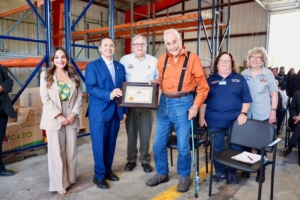
At Dr. Ike’s Home Center, which operates two locations in Laredo, Texas, and another in Zapata, CFO Carolyn Epstein says construction activity has slowed in South Texas.
“Labor is an issue, prices, tariffs, cost of goods has really gone up,” Epstein says. “They’re looking for more efficient products, installations.”
Those pressures are influencing purchasing decisions and project planning, according to Epstein.
At Dr. Ike’s Home Center, Epstein says the slowdown in South Texas has left many builders with inventories of unsold homes, making them cautious about starting new projects. The company is meeting with its professional customers to assess their construction plans for the coming year.
Against that backdrop, Dr. Ike’s is concentrating on product availability and dependable delivery, helping contractors manage projects amid rising costs and uncertain demand.
“We really strive on having what they want in stock and a great delivery team and a great sales team,” she says.
Meeting Contractors Where They Are
Taken together, the experiences of these four dealers show how the definition of contractor service is expanding.
For some customers, convenience means placing an order after business hours or receiving a photograph confirming that materials reached the jobsite. Others want help evaluating unfamiliar building products, faster estimates or a supplier who understands the financial pressures affecting their projects.
The common thread is the importance of making contractors’ work easier.
As Clark of Hiwassee Builders Supply puts it, the competition for professional customers has intensified, and dealers must continue adapting to keep their business.
“We have to step our game up because every day you’re competing for that customer,” Clark says.