
LBM Products & Pro Trends: Building a Better Pro Business
An up-to-date look at contractors’ evolving purchasing habits, service expectations and what drives their choice of building materials dealer.
A contractor’s choice of building materials supplier can have implications for everything from crew productivity to the profitability of a job. Of course, competitive pricing matters as does does having materials available, getting orders to jobsites accurately and on time, and having knowledgeable help when problems arise.
For lumber and building material (LBM) dealers competing in today’s sometimes volatile marketplace, understanding how contractors weigh those considerations can help identify opportunities to capture more of their spending.
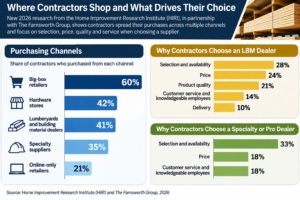
Research released in 2026 by the Home Improvement Research Institute (HIRI), in partnership with The Farnsworth Group, found contractors continue to spread their purchases across multiple channels. Big-box retailers were used by 60% of contractors surveyed, followed by hardware stores at 42%, lumberyards and building material dealers at 41%, specialty suppliers at 35% and online-only retailers at 21%.
Among contractors choosing an LBM dealer, 28% cited selection and availability as the primary reason, followed by price at 24%, product quality at 21%, customer service and knowledgeable employees at 14% and delivery at 10%.
Similar priorities emerged among contractors choosing specialty and pro dealers, with selection and availability leading at 33%, followed by price and customer service or knowledgeable employees, each at 18%.
The findings point to several competitive advantages dealers can develop beyond pricing.
Make the Most of Reliability
The American Supply Association’s (ASA) 2026 Voice of the Contractor Survey found product availability and inventory remained the top consideration when contractors selected a plumbing/PVF distributor. Delivery service, however, moved from fifth place in ASA’s 2023 study to second in 2026, ahead of price, inside sales support and counter service.
When evaluating delivery service, contractors ranked order accuracy first, followed by consistent, on-time delivery windows and low or no delivery fees.
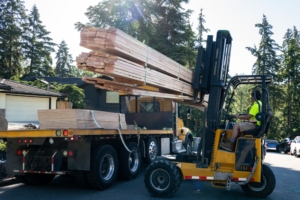
The implications extend to LBM dealers. An incomplete lumber package or a late drywall delivery can disrupt an entire jobsite. Savings on materials can quickly disappear when a crew is left waiting.
Digital Meets the Jobsite
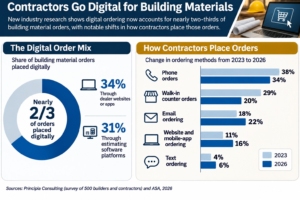
Principia Consulting’s ongoing research of 500 builders and contractors found nearly two-thirds of building material orders were placed digitally, with 34% placed through dealer websites or apps and 31% through estimating software platforms.
ASA’s findings also point to changing purchasing habits. Between 2023 and 2026, phone orders declined from 38% to 34%, while walk-in counter orders dropped from 29% to 20%. Email ordering increased from 18% to 22%, website and mobile-app ordering rose from 11% to 16% and text ordering increased from 4% to 6%.
ASA also found generational differences in purchasing habits, with younger contractors more likely to use digital ordering systems.
Research released this year by the National Association of Electrical Distributors found construction management platforms are making purchasing more digital and supplier performance more transparent. Yet contractors continue to rely on distributors for technical support, complex orders and problem-solving.
A contractor might check inventory online at 9 p.m., text an order from the jobsite the next morning and call an experienced salesperson that afternoon to work through a construction problem. Independent LBM dealers capable of accommodating those interactions can become more valuable business partners.
Make It Easier to Build
In an August 2026 examination of customer service, the Northeastern Retail Lumber Association encouraged dealers to move beyond general promises of great service and identify what their customers actually value.
That means evaluating measurable aspects of operations, including delivery accuracy, response times, fill rates, material pickup procedures, account credits and how problems are resolved.
For LBM dealers developing their 2027 business plans, those measures provide a starting point for evaluating their competitive position.
Helping contractors spend less time chasing materials, tracking deliveries and correcting orders gives them more time to build—and more reasons to return to their supplier.
Big Boxes Intensify Competition for Pros
Third-quarter 2026 earnings calls from The Home Depot and Lowe’s revealed how aggressively the nation’s two largest home improvement chains are pursuing professional customers through investments in specialized distribution, digital purchasing tools and jobsite delivery.
 The Home Depot: Through SRS Distribution and its acquisitions, Home Depot is expanding its reach into specialty building materials while working to sell more product categories to existing professional customers.
The company reported progress toward its $400 million cross-selling goal involving SRS in 2026 and indicated it was looking to double that figure in 2027.
Home Depot is also investing in digital capabilities specifically designed for contractors, including project planning tools, material lists and customer account dashboards. Delivery improvements include allowing customers to provide site-specific instructions and business hours, along with better delivery tracking. Company executives reported record levels of on-time, complete deliveries and customer satisfaction scores.
 Lowe’s: During the company’s Nov. 18 earnings call, chairman, president and CEO Marvin Ellison says Lowe’s is gaining market share among small and midsize professional customers.
The company reported positive comparable sales in lumber, electrical and rough plumbing, attributing that performance in part to investments in inventory breadth and depth, digital tools and service.
Through Foundation Building Materials (FBM) and Artisan Design Group (ADG), Lowe’s is also establishing a larger presence in specialized building materials distribution and interior construction services.
However, Ellison indicated the company would remain selective about entering additional building material categories based on their profitability.
Competitive implications: For independent LBM dealers, the competitive threat extends beyond the purchasing power and promotional budgets of national chains. Home Depot and Lowe’s are investing in capabilities traditionally associated with specialized dealers, from contractor-specific purchasing systems to jobsite logistics and technical product expertise.
Local relationships remain an important advantage, but national competitors are increasingly offering the operational conveniences that can help win—and retain—a contractor’s business.