




How to Grow Beyond Your Market — W.B. Howland Company
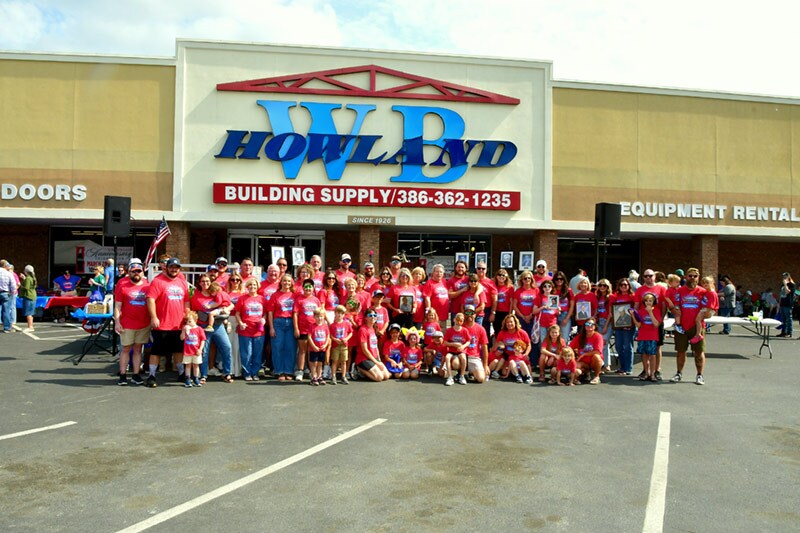
Members of the Howland and Fletcher families gather outside W.B. Howland Company, including the nine original grandchildren of W.B. Howland alongside spouses, children and grandchildren, representing generations connected to the business.
W.B. Howland Company, a Century Club retailer in Live Oak, Florida, blends generations of family ownership with a business spanning hardware, building materials and truss manufacturing.
For nearly a century, a single pecan tree stood watch over W.B. Howland Company in Live Oak, Fla., casting cooling shade across a parking lot that has seen generations of customers come and go. The company literally grew around the tree, having built a new store on the same parking lot in 1976. The tree’s death—some locals say it was struck by lightning—could have marked the quiet end of a symbol. Instead, the company replaced it with another fully grown pecan tree, transplanted from the founding family’s 1880 homestead, set into the same ground, just in time for the store’s 100-year celebration this March.
That decision says as much about W.B. Howland as anything on its balance sheet.
“The company has been a family tradition, a family venture forever,” says third-generation owner and president Lyn Fletcher. “It’s a part of our life. It’s not an expendable asset. It’s a member of the family.” He details the building materials and other critical products previous iterations of the business supplied to the communities they served long before today’s operation. “I’m something like the 12th generation of Howland-bloodline merchants in North America.”
At a time when many independent hardware dealers are mulling succession, scale or exit, W.B. Howland is thinking in centuries. Inside that distant view is a business built to grow beyond its backyard. In a county of about 48,000, roughly 6,000 of whom live in Live Oak, W.B. Howland has long faced the limits of a small local market. To move past those boundaries, the company expanded into truss manufacturing—creating a regional operation that complements hardware and building materials and reaches far beyond its home base. That same forward focus continues today as the company prepares for what Fletcher sees as the next major shift: artificial intelligence.
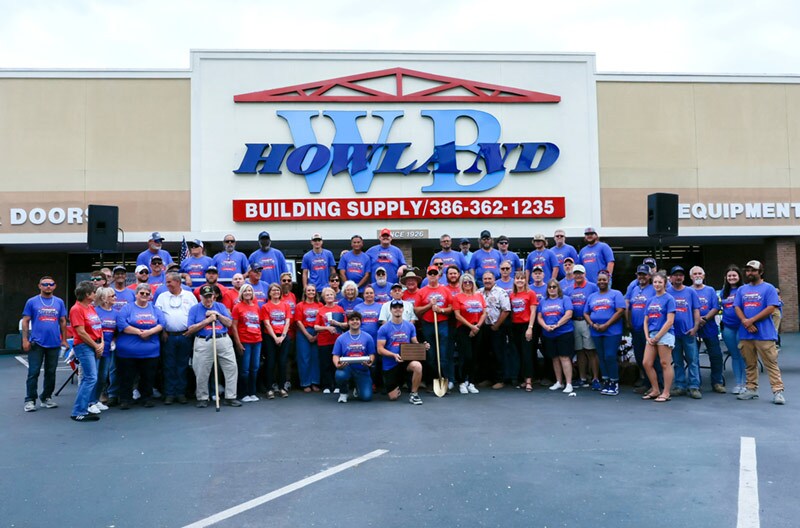
Former and current W.B. Howland Company team members place a time capsule during its 100th anniversary celebration in Live Oak, Fla., as part of a ceremony that also included a plaque dedicated to the memory of employees who have passed on.
Built on Memory and Movement
In Live Oak, the store has remained in the same place for a full century, a daily touchpoint for the community. “Every day someone comes in and tells a story about something that happened in this business with someone they love,” Fletcher says.
Those tales range from childhood memories of candy bars and ice cream to weekly family trips into town, when a visit to Howland’s was both necessity and reward. During its centennial celebration, the company leaned into those shared experiences—reviving its famed hand-dipped ice cream for a single day and drawing thousands of people from across the region.
For chief operating officer Kyler Gray, the event carried a broader purpose. “It was important that people look at W.B. Howland as the community store,” he says. “This was an opportunity to showcase everything we do, inside and outside.”
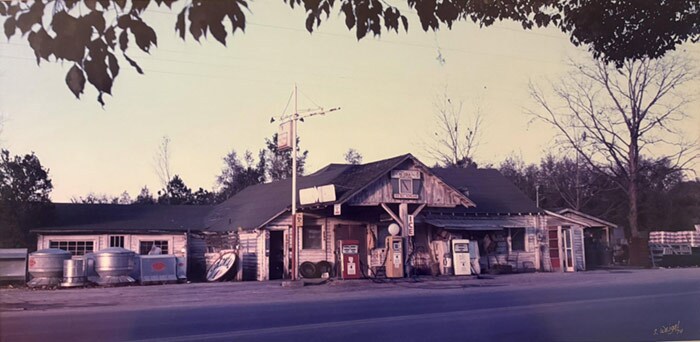
W.B. Howland’s roots go far deeper than its 1926 founding in Live Oak. The family’s mercantile lineage runs through earlier Florida locations and even further back through generations of trade. It all goes back to John Howland, a Mayflower passenger, whose descendants continued in trade for generations before establishing operations in northern Florida in the 1800s—laying the foundation for W.B. Howland’s eventual emergence.
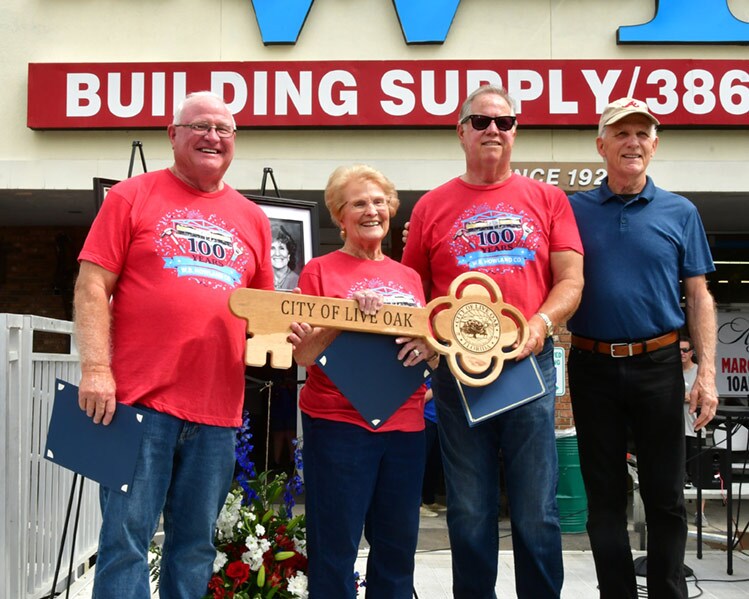
W.B. Howland Company marked its 100th anniversary in Live Oak, Fla., this March with a community-wide celebration that included mayor Frank Davis presenting the key to the city. (From left) Bill Howland, Barbara Howland, Lyn Fletcher and Davis.
One Operation, Multiple Engines
What separates W.B. Howland from many independent dealers is how tightly its operations are integrated.
Retail, design, sales and customer interaction all take place at the main location. Truss manufacturing happens just five blocks away. The connection between those two sides of the business is constant. “It’s all under one roof,” Fletcher says of design and sales.
Gray expands on that operational advantage: “We’re a one-stop shop. That creates better service and stronger relationships with builders. It allows contractors to grow their business because of efficiency and cost advantages.”
That integration becomes especially valuable with complex jobs, particularly in multifamily construction. W.B. Howland’s truss operation, acquired in 1994, opened the door to regional growth beyond its immediate market—enabling the company to handle large-scale projects that smaller truss plants can’t accommodate.
The structure also creates flexibility. When challenges arise on a job, the proximity of design, materials and manufacturing allows the team to respond quickly—something both Fletcher and Gray say is a differentiator.
Across the full operation, W.B. Howland employs about 200 people, roughly half in truss manufacturing. The combined retail-and-production footprint spans more than 40 acres, with approximately 15,000 square feet of retail space and an additional 15,000 square feet of warehouse and fulfillment capability.
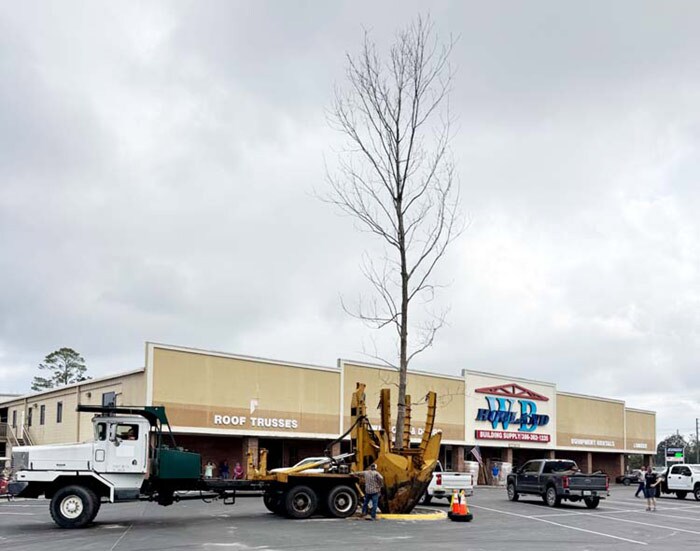
A new pecan tree is planted at W.B. Howland Company in Live Oak, Fla., with a tree specialist and crane crew, revitalizing a longstanding symbol of the business and its community.
Inventory as Family Philosophy
The company’s approach to inventory goes back to its founder’s pithy motto: “Boys, if we don’t have it, we can’t sell it.”
That mindset continues to guide the business.
“Yes, still today, if you haven’t got it in stock, you can’t sell it,” Fletcher echoes. “We don’t pay too much attention to turns. We don’t want to send people away.”
That philosophy runs counter to more conservative inventory strategies, but it reflects the company’s role in its market. With a strong contractor base and steady walk-in traffic, availability becomes a competitive advantage.
The origin of that thinking is almost literal. Fletcher recounts how his grandfather would load a wagon with goods and head out to serve settlers across the area—trading, extending credit and adapting to what people needed.
A new pecan tree is planted at W.B. Howland Company in Live Oak, Fla., with a tree specialist and crane crew, revitalizing a longstanding symbol of the business and its community.
Orgill and the Path Forward
W.B. Howland’s partnership with Orgill has become increasingly central to the store’s evolution.
“We’ve been with Orgill close to 20 years,” Gray says. “That partnership helps strengthen our independence and allows us to compete without losing who we are.”
Over the past year, the company has expanded that key relationship, bringing in new product lines and working alongside Orgill on store planning, layout and merchandising strategy. The goal, Gray says, is to modernize the store while preserving the familiarity customers expect.
Fletcher adds that the team is actively studying other Orgill dealers as part of that process—looking for ideas while building something distinct.
This approach is part of a broader balancing act: adapting to new retail expectations while still maintaining a deeply ingrained identity.
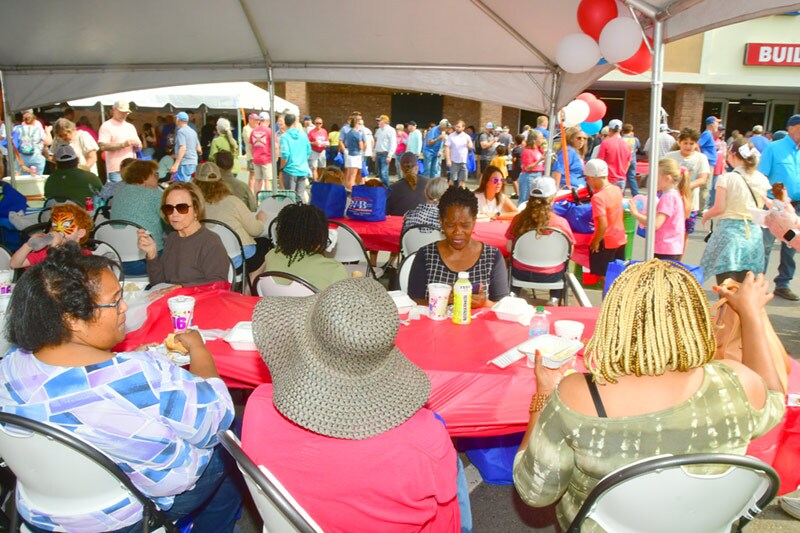
Thousands turned out to celebrate W.B. Howland Company’s 100th anniversary, where moments such as a child enjoying ice cream echoed the family’s long tradition of making the store a gathering place as much as a business.
Built for the Community
For all its operational complexity, W.B. Howland still operates as a community business first.
That shows up in visible ways—events, services, daily interactions—but also in quieter efforts that Gray calls “silent generosity.”
The centennial celebration brought some of that into the open, but both Fletcher and Gray emphasize that giving back has long been part of the company’s culture.
The store itself reflects that connection. In addition to hardware and building materials, W.B. Howland includes elements such as a convenience store, food and everyday essentials—serving as a destination for a wide range of customer needs.
It’s also a place where relationships span generations. Fletcher notes that roughly 70 descendants of the founding family remain connected to the business, even if they’re not involved in day-to-day operations. “I view this as I’m a steward of this business,” he says.
AI and What Comes Next
Even with a century behind it, W.B. Howland is focused on what lies ahead—and Fletcher believes the next chapter will be defined by artificial intelligence.
“I have put considerable time and effort into understanding what could be equivalent to the discovery of fire or the invention of the wheel,” he says. “We’re evaluating technologies, but we don’t want to reduce our workforce. The question is what our people will be doing as this evolves. I have 200 employees depending on me to figure that out.”
He sees AI as a transformation that will move faster and reach farther than past industrial shifts. For that reason, he has pivoted his own role away from daily operational tasks to focus on understanding and preparing for what’s ahead.
That work is still in the discovery phase, but it already extends into areas such as manufacturing, design and workflow efficiency. Gray notes that the company is evaluating AI-driven tools, particularly on the truss and production side, while also considering how those changes will affect its workforce.
Protecting people while adapting systems fits with the company’s broader approach. For W.B. Howland, history and the past blend beautifully into daily operations and help inform how it will approach the future.
The pecan tree in the parking lot captures that idea in a way customers can see. It connects the original store, the current operation and the next generation in a single, visible symbol—rooted in the past, growing into what comes next.
Fletcher bears the responsibility with pride. “There are many things more important than money,” he says. “Continuing the Howland legacy is one of those.”
4 Tips for Adapting to Technology
For many independent hardware store owners, the conversation about technology often centers on systems, vendors or incremental upgrades. At W.B. Howland Company, president Lyn Fletcher approaches it from a different angle: time, focus and responsibility. Four takeaways:
- Make time to understand what’s changing. Fletcher believes the pace of technological change—particularly with artificial intelligence—demands attention. That doesn’t mean implementing every new tool. It means dedicating consistent time to learning what exists, how it works and where it could apply to your business.
- Shift your role as the business grows. Earlier in his career, Fletcher handled day-to-day operational tasks directly. Today, he has moved away from recurring responsibilities to focus on long-term direction. That shift allows leadership to step back from immediate demands and evaluate broader changes—something that becomes increasingly important as technology reshapes workflows.
- Evaluate technology through your workforce. New tools often bring questions about staffing. Fletcher and his team are evaluating AI with a clear principle in mind: Understand how roles develop, not just how tasks change. “We’re thinking about what people will be doing as this evolves,” COO Kyler Gray says. For independent retailers, that considered approach can help frame technology to support teams rather than replace them.
- Stay open—and ask for help. Fletcher is direct about where W.B. Howland stands today: It’s still learning. “We’re in the discovery phase,” he says. “If anybody in the home improvement space is making good use of AI, I will take their call.” He also makes a point that applies across the industry: If others are further along, he wants to hear from them too. That openness creates opportunities to learn faster and avoid common missteps.