
From Stabilization to Momentum
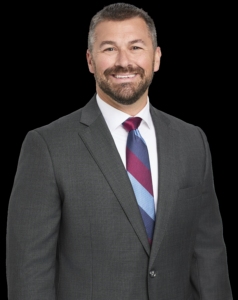
Do it Best CEO Dan Starr and new COO Nick Talarico discuss the company’s evolving leadership structure, integration priorities and the next stage of value creation and information for members.

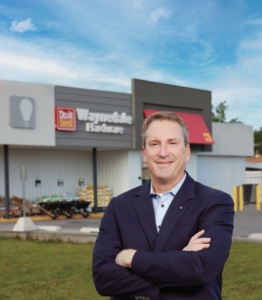
Do it Best Group’s recent decision to name Nick Talarico chief operating officer marks the latest step in the company’s effort to move beyond acquisition and into long-term operational integration. The leadership change consolidates responsibilities that had previously been divided between separate executive structures and reflects the company’s goal of operating as a single organization while continuing to support multiple retail identities, including Do it Best, True Value and locally branded stores.
The move comes nearly 18 months after Do it Best acquired True Value’s assets and follows a period focused largely on stabilizing operations, rebuilding retailer confidence and integrating key systems. Talarico, who was previously president of Do it Best, now oversees companywide operations as the organization works on supply chain optimization, technology investments, purchasing efficiencies and data-driven retail tools such as Retail Pulse.
In the following conversation with Hardware Connection, Starr and Talarico discuss why the company believes the time is right for a unified leadership structure, where integration efforts are headed, how retailers will benefit from the scale of the combined organization and what leadership lessons emerged during one of the most significant transitions in the home improvement industry.
Hardware Connection: Was there a tipping point when it came time to integrate the C-suite?
Dan Starr: I’d challenge the premise that there was one singular event. It’s better described as moving across a continuum and recognizing you’ve got the pieces in place to accelerate. One critical element was success in the first phase after the acquisition. We came into this acquiring a company out of bankruptcy whose operations were in free fall. The critical drive immediately after closing was stabilization of the enterprise. Retailers and members were relying on that business.
We really didn’t have much of the old guard at True Value, so you had brand-new executives trying to understand people, processes and systems, then stabilize. It then became important to move quickly toward one integrated executive team with shared accountability.
Nick Talarico: When the acquisition happened, it made sense to have parallel leadership structures. But over the last 18 months, we’ve made a lot of integration moves, and having one aligned leadership team allows for better decision making for our members. Inventory, pricing, merchandising, programs and service all benefit from a leadership team operating as one.
What remains of the integration process?
Talarico: There are two sides to integration. One is distinction, and that will continue. Do it Best, True Value and members’ own local brands remain distinct because they serve different communities and different go-to-market needs. The True Value brand carries a powerful legacy and strong consumer recognition. Do it Best has a strong reputation. We also support members who want to build around their own local identity and brand. A retailer who owns their local brand is a strong retailer, and a strong retailer is better for everyone in the system.
Where we’re integrating is primarily behind the scenes: supply chain purchasing scale, vendor programs, data capabilities, systems, operational processes and infrastructure. Those areas create value for members without requiring them to give up their identity.
Distribution center optimization remains a top priority. Integration isn’t a single event. It’s an ongoing process. The goal is building a stronger operating engine for everyone.
Starr: Distribution center optimization is always evolving. We’re already through the most dramatic phase of that work, but over the next year to year and a half we’ll continue rounding out acquisition-oriented adjustments. The other side is systems and IT platforms. Most organizations are operating on legacy systems older than people realize.
What kind of leadership does this next phase require?
Starr: The first phase was about restoring trust. Retailers needed to hear clearly and consistently that we were committed to them, to the True Value brand and to rebuilding the fundamentals of the business. Now the focus shifts toward momentum, alignment and execution. We’ve restored a lot of that trust, and now we have to turn it into measurable value for members. That means improving service, strengthening vendor partnerships, expanding purchasing opportunities, using data more effectively and giving retailers practical tools to improve sales and profitability.
Finally, we’re positioning the company for long-term growth through brand investment, data-driven retail programs, supply chain optimization, field support, e-commerce and merchandising. It’s less about asking whether the acquisition works and more about building a powerful flywheel effect around what this company can become.
What are some of the next-level benefits retailers will see over the coming 18 to 24 months?
Talarico: One of the first things is continuing to drive costs down through consolidation efforts and vendor discussions. As distribution centers optimize and assortments improve, we’ll create better programs and stronger cost structures for members. There are also integration activities that improve our overall cost structure and support member rebates. But beyond integration itself, we’re focused on value-added services that differentiate us.
If all we do is combine systems and lower delivery costs, we become a better distributor. But our ambition is higher than that. We want to help members make better decisions faster and compete more effectively in their local markets while staying true to themselves as entrepreneurs. That includes stronger tools through initiatives such as Retail Pulse, which delivers actionable pricing insights, assortment recommendations, merchandising support and category visibility. Our members are independent, but they’re interconnected and they’re not fighting alone.
How are True Value retailers continuing to feel represented within the larger organization?
Starr: We are fully a co-op that serves the best interests of our membership. We’re built on shared interest and leveraging the power of independent retailers for everyone’s benefit. At the same time, retailers still have distinctions in how they go to market. Whether they’re operating under True Value, Do it Best or their own local brand, they each have different market positions and needs.
True Value retailers still need reassurance through field leadership, retail advisory input, market conversations and direct engagement that their needs are being heard and addressed. Over the last 18 months, one thing that stood out is that many True Value retailers previously did not have strong access to leadership. A small thing like being on the market floor, looking someone in the eye, having a conversation and listening to their concerns matters.
Talarico: Members should know that we’re listening. Whether it’s service improvements, assortment decisions, operational fixes or technology enhancements, we listen to our members and demonstrate that their feedback affects how we operate.
What has been the biggest personal leadership challenge over the last 18 months?
Starr: Balancing urgency with empathy. We knew we had to move quickly. Retailers needed answers, vendors needed direction and employees needed clarity. But at the same time, people had been through significant disruption and uncertainty. Years ago, I used to quote Jack Welch: “When the rate of change inside an institution becomes slower than the rate of change outside, the end is in sight.” That message was about the importance of speed and change. But during an acquisition like this, even when speed is necessary, it can come across as impersonal if you’re not listening and communicating effectively.
Talarico: One thing I learned over the last 18 months is that people are always watching leadership. I had a trusted colleague tell me one day that while I said I was doing fine, I didn’t look fine, and people were noticing. That was hard to hear because I knew he was right. I was wearing stress visibly, and that affects the people around you. So I’ve focused more on making sure people know they’re seen and appreciated because there’s been a lot of change around here. That’s the culture of Do it Best—building relationships with each other, with our team, with our members and with our vendors. Over the last 18 months, I’m more convinced than ever that it’s the best environment for business.