

Retailer 2 Retailer: Army to Aisles—Bring the Leadership, Leave the Bureaucracy
By Taylor Cox
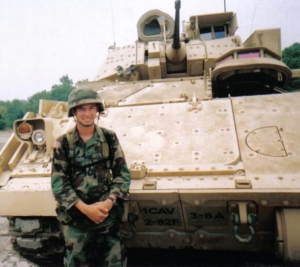
My path to Cox Hardware & Lumber started over pancakes at IHOP. In January 2004, I was a high school senior eating lunch with friends when my congressman’s office called with news of my acceptance to West Point. Naturally, I demonstrated the sound judgment expected of a future Army officer by hanging up; fortunately, they called back.
Four years at West Point led to eight years on active duty as an armor and military intelligence officer, including two deployments to Iraq. The Army gave me a sense of purpose and taught me valuable lessons about leading people—it also introduced me to seven meetings in one day.
Ten years ago, I returned home to work alongside my dad at our family’s hardware, lumber and industrial store. I wanted the chance to help lead a small business and see the impact of our decisions firsthand. At Cox Hardware, I’ve tried to apply the Army’s lessons in accountability, communication and empowering people while leaving its unnecessary bureaucracy behind. Here’s how:
Accountability

Accountability starts with making sure people understand what they’re responsible for. The military takes accountability seriously—at daily formations, unit officers tell their commander that their charges are “all accounted for”; weapons and other sensitive items are counted by serial number; and military leaders at every level are held accountable for everything their unit does or fails to do. On the other side of that coin, leaders have a responsibility to provide clear instructions, training and time to work. Store leaders can implement this by using strong, in-depth KRAs (Key Result Areas) for each position, ensuring staff understand what their role entails via the KRA and holding them accountable to the standards you’ve set.
Our online storefront displays on-hand quantities and updates them multiple times a day, so accurate counts are essential to maintaining customers’ trust. Every department head’s KRA requires a complete count of their merchandise every four months. Our inventory clerk marks completed locations on a store map in the office, giving us a clear picture of our progress and where we need to follow up. Do your employees know what success looks like, and have you put those expectations in writing?
Communication
Good communication gives people a clear understanding of what needs to happen, why it matters and how they can help. In the military, Operation Orders (OPORDs), tactical radios and even all the acronyms we use help us send messages faster or with more clarity. The most important aspect of communication for store leaders is to do it—and do it often! Open communication like this builds trust, reduces stress and quashes rumors, and it doesn’t have to turn into long meetings.
In our store, one-on-ones, daily syncs and quick weekly checkups keep people informed and build rapport while leaving time for their tasks and customers. When is the last time you talked with every single one of your staff—about their families, their work or their ideas?
Empowering People

Empowering your people means giving them the training, trust and authority to make decisions and room to put those things to use. The military works hard to empower its subordinates; even the newest soldier, fresh from basic training, must understand the basics of every mission—their unit’s task and purpose, what adjacent units are doing and a general concept of the operation—so that they can still accomplish the objectives, even if a leader isn’t there to provide direct supervision.
We encourage our department heads to remerchandise their areas when new items arrive, old SKUs sell through or displays need a refresh. I’ll offer suggestions on organization and product placement, but they have free rein to draw on their experience and create displays that help customers choose what they need—knowing my way around an M1A2 Abrams tank doesn’t mean I know what will sell best on an endcap. How about your store: Have you trained your floor sales staff and cashiers to know the basics of selling, product knowledge and store policy so they can serve the customer well, or do they just point to an aisle and keep restocking?
Cutting Needless Bureaucracy
Rules and procedures should help people get work done; when following the process becomes more work than doing the job, it’s time to simplify. The military is nothing if not a bureaucracy, particularly at higher levels; my final years in the Army were spent in a division-level headquarters, responsible for approximately 14,000 soldiers, and there were certainly a large number of requirements, multiple levels of approval and of course many, many meetings. One of my leaders told me a great analogy—a good officer should act like an umbrella, in that he shields his subordinates from higher-level politics, endless nonessential taskings and competing priorities as much as possible, so that they can accomplish their mission more effectively.
 Our store prints adhesive price labels in-house; we used to stick each label onto a plastic chip before placing it on the shelf or a peg hook, but our new shelf channels let us insert the labels directly, eliminating a step every time we change a price. If changing a price tag requires a flowchart, I may have brought a little too much of the Army home with me. Are you protecting your staff from redundant or replicated requirements, or are they swamped with too many little things to do every day?
After 10 years in hardware, I’d like to tell you I have leadership figured out. My staff would probably appreciate that, too. I’m still learning to check my own instructions, listen when someone has a better idea and recognize when a procedure has outlived its usefulness. My job is to help our people succeed so they can take care of our customers. That takes discipline, humility and the occasional admission that I’m the one slowing things down. After all, I’d hate to leave the Army to escape the bureaucracy, only to become the guy who makes everyone attend seven meetings in one day.
Taylor Cox is a fourth-generation leader at Cox Hardware & Lumber in Houston and a West Point graduate who served eight years in the U.S. Army, including two deployments to Iraq. He’s spent the past 10 years applying what the Army taught him about leadership to hardware retail—while trying to leave the seven-meeting days behind.
Field Notes for the Salesfloor
Military leaders have spent centuries thinking about leadership, strategy, logistics and making decisions under pressure. Their words may come from the battlefield, but many of the lessons translate surprisingly well to running a hardware store. Here’s how Taylor Cox translates those lessons to his family’s business:
“A good plan violently executed now is better than a perfect plan next week.” —Gen. George S. Patton
-
Move promptly on routine decisions, such as refreshing an endcap or testing an item. Give costly or irreversible choices more time.
-
Name the person responsible, set a deadline and explain what a successful result should look like.
-
Give the plan a fair trial, then adjust using sales results, employee feedback and customer response.
-
Use your size to your advantage: respond quickly when a customer need or opportunity appears.
“Take care of your people. This is second only to mission.” —Gen. Colin Powell
-
Train people before holding them to a standard. Provide the information, tools and time they need to succeed.
-
Ask what is making their work harder and follow through when you can remove an obstacle. If you cannot fix something, explain why.
-
Learn what matters to your employees. Asking about their families and interests helps build relationships beyond assignments and schedules.
-
Address problems fairly and recognize good work specifically. Explain where people can improve and where they excel.
“Infantry wins battles, logistics wins wars.” —Gen. John J. Pershing
-
Sales create revenue; reliable operations help protect the profit. Receiving, pricing, purchasing and inventory accuracy deserve attention before problems appear.
-
Schedule time to work on the business and protect it as seriously as a customer appointment. Recurring problems need focused attention.
-
Track repeated stockouts, receiving errors and pricing discrepancies. Look for the underlying cause and assign someone to fix it.
-
Document recurring tasks so the work can continue when the person who usually handles it is absent.
“So in war, the way is to avoid what is strong and to strike at what is weak.” —Sun Tzu
-
Identify needs competitors leave underserved, including specialized products, knowledgeable help, convenient services or hard-to-find items. Compare your strengths with theirs before chasing another category.
-
Ask customers what they struggle to find and employees what requests they keep hearing. Those conversations can reveal a worthwhile niche.
-
Evaluate new products and services against that niche. Each addition should meet a real customer need. Review its performance after it has had time to sell.
-
Build a reputation for solving particular problems well. Give customers a clear reason to choose your store.
“The supreme quality for leadership is unquestionably integrity. Without it, no real success is possible.” —Gen. Dwight D. Eisenhower
-
Keep your promises to customers and employees. If circumstances change, explain what happened and what you will do next. Tell people before they have to ask.
-
Apply policies consistently. People notice when the rules depend on who is asking or who made the mistake.
-
Own your errors promptly. Correcting a wrong price or admitting a poor decision builds more trust than explaining it away.


