

Making Room for What’s Next
At nearly 100 years old, Shell Lumber & Hardware is rethinking its salesfloor, expanding its assortments and preserving the service that generations of Miami customers have come to expect.
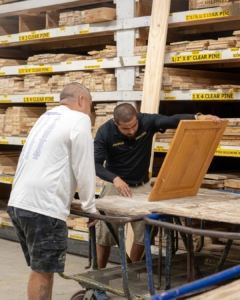
Walking into Shell Lumber & Hardware in Miami used to require a certain sense of adventure. Merchandise stretched toward the ceiling, handmade fixtures crowded the aisles and customers navigated a labyrinth of products accumulated over decades. Finding something could be a challenge. Retrieving it sometimes required an employee and a ladder.
For longtime customers, the abundance was part of Shell’s appeal. For the incoming general manager Carlos Montoya, the store’s sprawling assortment represented an opportunity.
“The store was very dark,” says Montoya, who has been with the Miami-based company for two years. “There was an abundance of stuff, and it was very confusing, like a maze.”
Nearly a century after its founding in 1928, Shell is making substantial changes to how it presents merchandise, manages inventory and serves customers. Montoya, who has spent more than 40 years in retail, including positions with Home Depot and Office Depot, is drawing on that experience to prepare the business for its second century.
But modernization at Shell comes with a condition: Preserve the qualities that made the store a Miami institution in the first place.
A Different View of the Sales Floor
Montoya found plenty worth preserving when he arrived.
“The customer service and that culture,” he says, describing Shell as one of the friendliest retail environments he has encountered.
The store also offers merchandise that customers have difficulty finding elsewhere, particularly in its specialty lumber operation. Shell carries wood species from Brazil, Africa and Central America, serving architects, contractors and customers seeking materials for high-end projects.
Montoya says the business began as a lumberyard, with hardware added later. That heritage remains an important part of its identity.
The challenge is accommodating customers maintaining older Miami homes while introducing products suited to newer construction and changing lifestyles.
Shell serves homes built in the 1970s that require older replacement parts, for example, while also expanding its selection of smart-home devices and contemporary products.
“We have to have what homeowners are using today,” Montoya says.
To support that effort, Shell draws on multiple suppliers, including Ace, Orgill, True Value and other local distributors. Montoya is also applying inventory-management practices and retail productivity measurements learned during his years with Home Depot.
The changes are visible throughout the store. Merchandise that once required ladders is now within easier reach, departments have been reorganized to be more cohesive and signage is taking a step up, too.
The objective is a more accessible shopping environment where customers can readily identify products without sacrificing Shell’s extensive assortment.
Rethinking Established Categories
One of the most substantial changes involves fasteners, a department where Shell previously stocked limited quantities of many products and carried slow-moving merchandise that might sell only once a year.
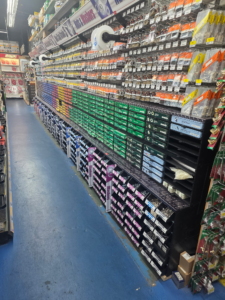
Working with Midwest Fastener, the store reviewed sales, inventory and customer demand, including feedback from contractors who had been purchasing fasteners elsewhere.
The resulting assortment encompasses about 5,000 SKUs across 240 linear feet, with package sizes suited to homeowners and professional customers.
Montoya says the revised approach helps Shell maintain availability while reducing unnecessary inventory and out-of-stocks.
Similar work has taken place in plumbing, electrical and garden merchandise. In plumbing and irrigation, the emphasis has shifted toward providing more complete project solutions rather than requiring customers to visit another retailer for missing components. Electrical assortments have expanded to include more LED products and choices for contemporary applications such as smart home thermostats.
Montoya reports double-digit profit growth and greater customer engagement as the store works through the changes, although he emphasizes that expanding the assortment only makes sense when the additional products generate enough sales to justify the shelf space and inventory investment.
Employees Help Guide the Changes
Replacing fixtures and adding signage were the first-step, straightforward improvements. Bringing employees along and changing decades of established practices required a more thoughtful approach.
Shell has employees with extensive knowledge of its merchandise and customers, and Montoya says their involvement has been essential.
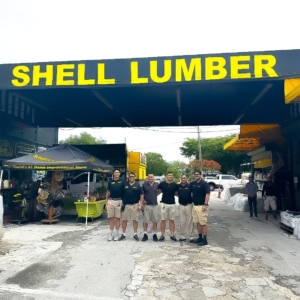
“We did it gradually,” he says. “We got feedback from the clients and adjusted as we went along.”
He points to Paul, a fastener department employee with 15 years at Shell, who helped identify potential problems during the department reset.
Paul was concerned that moving certain products to higher shelves could make them difficult for elderly customers to reach. He also understood the purchasing patterns of contractors who regularly bought particular items in quantity.
That knowledge helped guide the merchandising decisions made with Midwest Fastener.
Montoya says employees must be involved in the process because they understand how customers shop and will ultimately carry out the changes.
The store’s customer mix is changing as well. Montoya estimates that homeowners now account for about 60% of business, with contractors representing 40%.
Expanded Sunday hours and later closing times have made shopping more convenient for homeowners, while Shell continues building deeper assortments for professionals.
That combination of old and new customers is familiar territory for a business where Montoya sees grandparents, children and grandchildren shopping across generations.
Looking Toward 100 Years
Shell’s specialized inventory and customer relationships extend beyond its Miami sales floor.
Its lumber operation serves customers across a three-county area, while a distribution facility supports store inventory. In hurricane season, Shell works with Miami-Dade County emergency-response representatives and suppliers to prepare for demand and secure merchandise when storms threaten.
Montoya says communication with contractors helps the business anticipate requirements several days in advance.
Looking toward Shell’s 100th anniversary in 2028, Montoya is planning another substantial category investment: an expanded garden department with exotic plants, trees, smaller plants and knowledgeable employees who can advise customers on their care.
His ambition is to develop one of South Florida’s largest garden departments and give customers another reason to visit Shell.
For Montoya, the larger lesson is that a retailer’s history should inform its future without preventing change.
Shell’s customers still expect unusual merchandise, knowledgeable employees and personal attention. Increasingly, they can find those things in a store designed to make shopping easier.
After nearly 100 years, there’s still room to rearrange the shelves.
5 Ways to Modernize a Store Without Losing Its Character
Carlos Montoya, general manager of Shell Lumber & Hardware in Miami, shares five practical tips for modernizing store operations while preserving the qualities customers value. His guiding principle: Successful modernization builds on the people, products and customer relationships that have sustained a business for generations.
1. Take a fresh look at the sales floor. Merchandising practices that developed over decades may no longer serve customers or employees particularly well. At Shell, tall displays, crowded aisles and limited signage made shopping difficult and increased the labor required to retrieve merchandise. Reorganizing departments and bringing products within easier reach can improve the shopping experience while making employees more productive.
2. Let customer demand guide assortment changes. Before resetting its fastener department, Shell reviewed sales and inventory and talked with contractors who weren’t purchasing certain products at the store. Working with Midwest Fastener, the retailer developed an assortment of about 5,000 SKUs across 240 linear feet, with packaging options for homeowners and professionals. The objective is to improve availability without carrying unnecessary inventory.
3. Preserve older products while introducing new ones. Shell serves customers maintaining decades-old Miami homes alongside homeowners seeking smart-home technology and LED lighting. Montoya’s approach is to accommodate existing demand while identifying products the store hasn’t traditionally carried. Modernization doesn’t require abandoning established customers.
4. Give experienced employees a voice. A fastener department employee with 15 years at Shell raised concerns about product accessibility for elderly shoppers and shared purchasing insights about regular contractor customers. That feedback helped shape the department reset. Employees who understand customer habits can identify problems that might otherwise escape notice.
5. Build on the strengths that competitors can’t easily duplicate. Shell’s extensive specialty lumber assortment, knowledgeable employees and longstanding customer relationships remain central to its business. Montoya is applying new merchandising and inventory practices while protecting those advantages. The goal is a more productive store that still feels like Shell.


