
A Mother’s Grief Becomes a Mission That Saves Lives at Stan’s Ace Hardware
By Michelle Leopold —
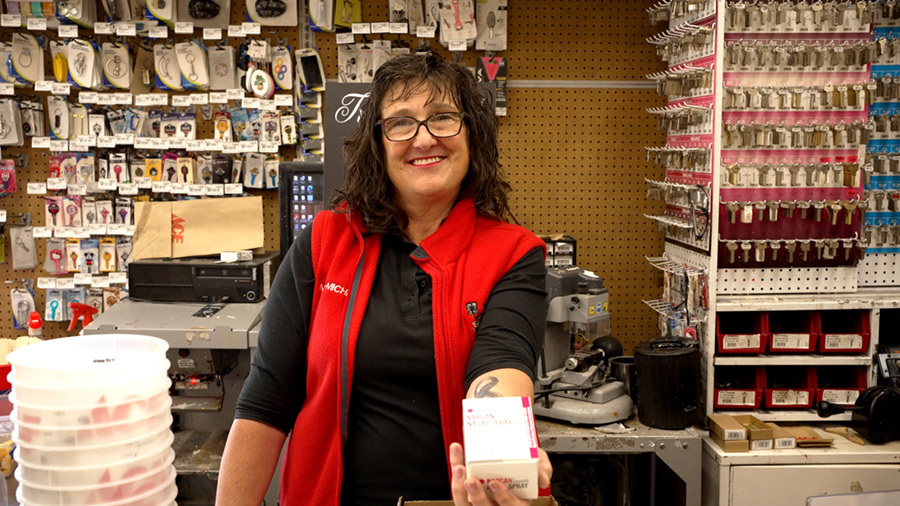
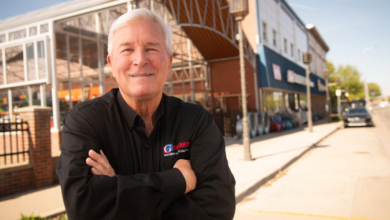
Michelle Leopold, co-owner of Stan’s Ace Hardware, has turned personal tragedy into a community mission, helping thousands of people learn how to recognize and reverse an overdose.
Stan’s Ace Hardware co-owner Michelle Leopold, who operates six stores across the San Francisco Bay Area, has become a leading voice for fentanyl awareness.
I often describe myself as the mom in our mom-and-pop Ace Hardware stores. My husband and I operate six Stan’s Hardware locations in the Bay Area, and I’ve learned that running a store sometimes means stepping into roles far beyond recommending fasteners, mixing paint or helping someone choose the right drill bit. More than a decade ago, I pushed for pesticide-free plants to support pollinators long before it became mainstream. That taught me that being a retailer can overlap with being a responsible global citizen.
In the years since we lost our older son, Trevor, to fentanyl poisoning, that overlap has defined my life. Since we began our naloxone training events four years ago, the landscape has shifted dramatically: Awareness of illicit fentanyl has grown; naloxone, used to treat overdoses, has become widely available—often at no cost—and overdose deaths are declining in nearly every state. Because of this encouraging progress, 2025 was my final year hosting our large store events. But I’ll always use my voice to raise awareness that #OnePillCanKill, and I’m happy to train any first responder who asks. I carry naloxone with me everywhere.
I never imagined how personal this mission would become. On November 17, 2019, Trevor died in his college dorm room after taking a single counterfeit pill that contained a lethal dose of fentanyl. He was 18. I am a mother to two boys—our younger son, Parker, and Trevor, whom I also carry with me everywhere.
The day Trevor died, I told my husband, “We can’t be quiet about this.” I chose immediately to speak openly about fentanyl poisoning and the circumstances of Trevor’s death. Stigma never entered my mind—my focus was preventing other families from ever having to stand where we were.
In those early months, I even had to learn what fentanyl was. I didn’t know the phrase “one pill can kill,” or that teens and young adults were dying after taking counterfeit pills they believed were safe. That lack of understanding troubled me. Parents felt alone. Kids assumed they were indestructible. So I began talking—first with small groups, then at schools and parent meetings, and eventually to anyone who would listen.
When Covid struck, those conversations moved online. I hosted a Zoom event for International Overdose Awareness Day in August 2020, explaining fentanyl and how to recognize an overdose. Local news picked it up, and more conversations followed. I became one of the early parent voices in the Bay Area explaining the crisis. Trevor’s story began to travel far beyond our family.
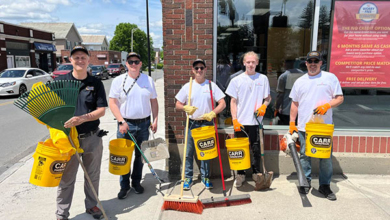
A simple idea—six days of naloxone training across six stores—became a turning point for Stan’s Ace Hardware. Leopold has now ended the large-scale events, saying access and awareness have caught up.
Partnerships and a Growing Mission
By 2021, I was collaborating with local harm reduction organizations such as RxSafe Marin for Overdose Day. They had deep community roots and welcomed a retailer willing to stand on a sidewalk and teach overdose prevention. Together we organized naloxone pop-ups, handing out kits and showing people how to use them. At the time, access to naloxone (also known as Narcan) was still uneven, and overdose education and naloxone distribution met a real need.
The turning point for our stores came in 2022. International Overdose Awareness Day falls on August 31, and a group of parents who had also lost children to this scourge were planning a Fentanyl Awareness event on August 21. I wanted to support both efforts. During a managers’ meeting, I floated a crazy idea: What if we used the week between those events to offer naloxone training at each of our six stores? I had barely finished the sentence before every manager said yes.
That changed everything.
We set up tables outside our stores and partnered with harm reduction groups to supply naloxone. We invited employees, customers and neighbors to take part. I handed out flyers to nearby businesses and kept the message simple: Whoever shows up, we’ll teach you. Throughout the week, we trained hundreds—one family, one carload, one curious teenager at a time. Employees felt empowered, customers felt welcomed and the community saw a hardware store taking on an unexpected but meaningful role.

For Leopold, sharing the story of her son Trevor is both an act of grief and an act of service—and it’s changing how communities understand fentanyl and naloxone.
Inside the stores, we framed Narcan as another safety tool. When someone buys a fire extinguisher, I don’t assume they live with an arsonist—they’re preparing to protect someone else. Naloxone is similar. You can only save another person’s life with it. That comparison helped reduce stigma and let people understand why carrying naloxone matters.
As the work expanded, so did the reach of Trevor’s story. Because I had spoken out from the beginning, reporters sought our perspective. Articles appeared locally and internationally. I use the hashtag #TrevorIsEverywhere because his story has traveled farther than he ever got to in life. Each time I talk to parents, students, Scouts or seventh graders, I think of his friend in his dorm that fateful night, who didn’t know the signs of an overdose and didn’t have naloxone. Knowledge changes outcomes, and I want young people to have information Trevor didn’t.
Continue Reading in the January 14, 2026 issue.