Shoppers at a Just Walk Out location inside Nashville International Airport in Tennessee adjust to the checkout-free system, with on-site staff helping guide them through the walk-out process.
Amazon continues to expand its Just Walk Out technology with a new RFID-based version designed specifically for events, pop-ups and temporary retail environments. The rollout aims to bring checkout-free shopping to high-traffic venues where traditional point-of-sale systems can create bottlenecks and long lines.
Originally introduced in 2018 and used in Amazon Go convenience stores, Just Walk Out technology combines sensors, artificial intelligence and machine learning to automatically track items shoppers select and charge them as they exit. The RFID-based version extends that system by using tagged merchandise and dedicated exit lanes, allowing customers to bypass traditional checkout without scanning barcodes or interacting with a cashier.
According to Amazon, the RFID lanes can be deployed in a matter of hours rather than weeks, making the system suitable for short-term retail installations such as stadiums, festivals and special events. The setup includes motorized entry and exit gates, in-lane screens that display cart totals prior to exit, and dynamic payment authorization so customers can review charges before completing their purchase. The company says Just Walk Out technology is currently operating in hundreds of locations globally, including airports, hospitals and sports venues.
For independent hardware retailers, the expansion of RFID-enabled checkout technology offers insight into how automation continues to influence retail expectations. According to Deloitte’s 2024 retail industry outlook, consumers increasingly value speed and convenience during high-traffic shopping moments, while retailers are evaluating technologies that reduce friction without replacing staffed service entirely. As cashier-free and RFID-based systems move beyond permanent stores and into temporary retail settings, the rollout highlights how checkout efficiency is becoming a more visible part of the overall customer experience.
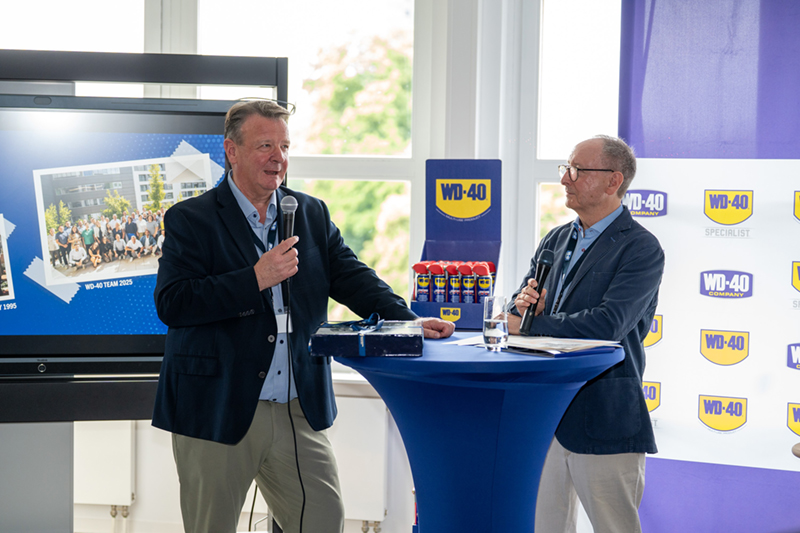
Brass has been with WD-40 Company for more than 30 years and was named president and chief executive officer in 2022.
WD-40 Company’s iconic product has been a fixture on hardware store shelves and in shops around the world for more than seven decades. Since its introduction in 1953 and rise to global household status, the company has built a reputation on practical performance and problem solving for DIYers and pros alike. Helming that legacy is Steve Brass, who was named president and chief executive officer of WD-40 Company in 2022 after more than 30 years with the business in a variety of leadership roles. WD-40 is also the sponsor of Hardware Connection’s Digital Beacon Awards, which recognize excellence in digital engagement by independent hardware retailers—a natural fit for a brand focused on staying relevant as customer expectations continue to evolve.
In this exclusive interview, Brass shares why adaptive change, not tradition alone, will define the next era for hardware retailers—and what else he sees shaping the road ahead.
Hardware Connection: Which principles of leadership are most important when guiding a company with a long legacy while still positioning it for its next chapter?
Steve Brass: I am fortunate to have inherited a wonderful legacy from those who came before me. Visionary WD-40 Company leaders like Jack Barry, Jerry Schlief and Garry Ridge created the iconic WD-40 brand and developed a global infrastructure to support future growth. They also built a powerful company culture rooted in defined values that have stood the test of time and guided decision-making across the global organization.
Our world is changing at an unprecedented pace, so as a leader of a global company with a powerful legacy, you need to be laser-focused on driving adaptive change to ensure the business is evolving faster on the inside than the world is changing on the outside. With the help of your people, you need to develop a sense of where the world is headed and act on those emerging trends. In 2025 we marked the company’s 72nd anniversary, yet I believe the best years are yet to come, as we embrace significant global growth potential.
A balance of legacy and innovation continues to guide WD-40 Company’s approach to product development, according to president and CEO Steve Brass.
How do you view the relationship between WD-40 and independent hardware retailers today, and where do you see the strongest opportunities for growth together?
Our relationship with independent hardware retailers is essential to our business. They’re often the first place people go when they’re looking for our products—and they continue to be our largest sales channel worldwide. One of the strongest opportunities we see to grow with our retail partners is in category expansion. Although our brand is known and beloved for our classic WD-40 Multi-Use Product, through continuous innovation to meet our users’ needs, we’ve created new delivery systems and new formulas for projects that require specialty solutions to get the job done right. To support product education and simplify decision making for our end users, partnering with quality retail partners is key, and in doing so, we leverage our digital and omni channels to ensure consumers can easily find, understand and purchase our products.
How does WD-40 approach product development and innovation?
You often hear the phrase, “You need only two things in life: duct tape and WD-40.” That’s because WD-40 Multi-Use is known for its straightforward, no-nonsense performance; it’s an honest and trusted solution with more than 2,000 uses and counting. For more than 70 years, WD-40 has focused on solving real problems by listening to the folks who rely on our solutions the most. From the WD-40 Smart Straw, designed with a permanently attached straw for added convenience, to WD-40 EZ-REACH, created to tackle those seemingly impossible, hard-to-reach areas and many more, our most successful innovations are rooted in minimizing end user pain points.
That same philosophy guided the development of the WD-40 Precision Pen. This product was shaped by direct insight from our PRO Board, a voluntary group of trade professionals who serve as our advisory board to provide unfiltered feedback and test innovations before they reach the market. Guided by our core value of making things better than they are today, the PRO Board plays a critical role in helping us evolve, ensuring every new solution meets a consumer need and stays true to the brand’s legacy.
Here’s your inside scoop on four hot trends in home technology, energy efficiency and automation from the 2026 Consumer Electronics Show.
The Consumer Electronics Show was, as always, a shock of innovation. More than 150,000 visitors swarmed Las Vegas in January to explore more than 4,000 booths packed with robots, AI gadgets and smart home tech. Beyond the stair-climbing vacuums and laundry-folding robots, the biggest trend that stood out was products that are smart, adaptable and seamlessly integrated into daily life. From AI assistants to homes that anticipate every need, the next wave of technology is positioned as an active everyday partner.
Smart homes are getting truly intelligent with devices that continue to learn habits, anticipate needs and optimize for energy, privacy and comfort. Unified standards like Matter enable devices from different brands to work together easily, so it’s simpler than ever to build a connected home without sticking to one manufacturer. Homes, kitchens and security systems are learning, adapting, even anticipating our needs.
Here are four trends that independent hardware retailers need to know about for 2026.
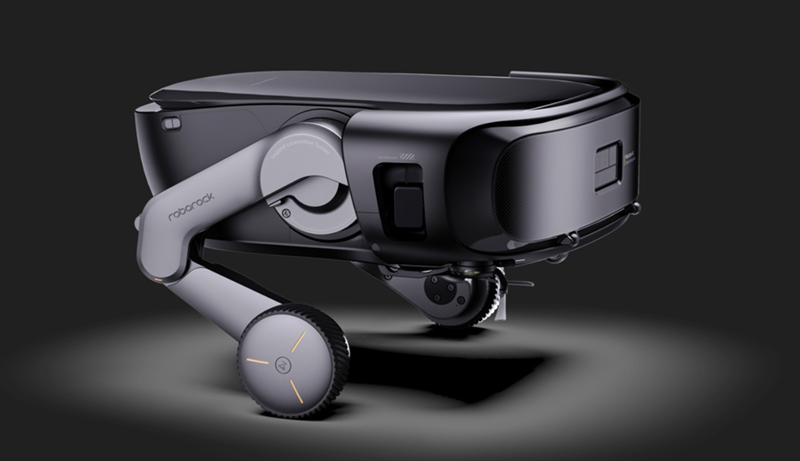
CES highlighted robot vacuums as a fast-moving category, with Roborock drawing attention for its stair-climbing Saros Rover.
Trend #1: Floor Robots
Robot vacuums emerged as one of the most competitive smart-home categories, led by Chinese brands pushing beyond incremental upgrades. Roborock drew a crowd with its stair-climbing Saros Rover (that also did a choregraphed dance), while Dreame, Ecovacs, Narwal, Tineco, Eufy and MOVA highlighted new improvements in suction, wet-dry cleaning and AI-based object detection.
These brands emphasized premium, all-in-one platforms and smarter automation, signaling where the category is headed. In contrast, established players Samsung and LG focused on practical enhancements such as improved obstacle avoidance and higher-temperature mop cleaning. The show revealed a clean split: Nimble newcomers push bold innovation, while established brands doubled down on reliability and performance.
Smart locks continue to evolve into full home security hubs, with brands such as Eufy introducing advanced biometric access.
Trend #2: Smarter Security
Smart locks are getting smarter and becoming full-fledged home security hubs. From hands-free UWB unlocking to 3D facial and palm-vein biometrics, brands such as SwitchBot, Eufy and Chamberlain are making access effortless and ultra-secure. Solar-powered and wireless-charging models like Lockin V7 Max and Veno Pro solve battery issues, while Matter and Thread offer smooth cross-platform control.
Some locks function as security systems, like myQ Secure View’s 3-in-1 smart lock with various entry options including face recognition, or Eufy’s AI-powered E40 that monitors for loiterers. With smarter sensors, AI detection and ecosystem-ready connectivity, the smart lock is no longer just a lock—it’s the future of home security.
As grill ownership remains high, outdoor living departments such as this one at Germantown Hardware in Germantown, Tenn., reflect a shift toward accessories, care products and experience-driven sales.
After years of record demand, the grilling category has entered a steadier phase, creating new opportunities for independent hardware retailers focused on service, accessories and experience.
The grilling and outdoor living category enters 2026 in a different place than it occupied during the pandemic surge: Ownership and participation remain high, but unit demand for big-ticket items has settled into a replacement-and-upgrade cycle, shaped by value-conscious shoppers and more selective discretionary spending.
The strongest evidence for why this category looks past its peak in the wake of the Covid years comes from consumer ownership and purchase timing. Biennial research from the Hearth, Patio & Barbecue Association (HPBA) captured a record runup during 2020-21: 70 percent of U.S. households (and 80 percent of homeowners) owned a grill or smoker, and 38 percent of grill owners had purchased a new one in the prior two years. Of those who had bought most recently, 27 percent said they did so because they were cooking at home more due to the pandemic. That’s classic pull-forward demand: Households bought earlier than they otherwise would have, which naturally lengthens replacement cycles in the ensuing years.
Outdoor kitchens continue to transform backyard living, blending comfort, cooking and gathering in one space.
Industry analysts describe the same pattern from a manufacturing/volume standpoint: IBISWorld points to a 2020-21 spike, then a 2022-23 normalization as pulled-forward purchases tempered year-over-year growth. In parallel, broader home-improvement demand has softened from its “off the charts” era. In the 2024 Market Measure Report from the North American Hardware and Paint Association, Orgill said that after three years of exceptional industry growth (21 percent in 2020, 14 percent in 2021, 9 percent in 2022), 2023 was expected to be flat to slightly down, with the broader home improvement market projected to be about 3 percent lower over the same period. That macro backdrop matters because many grill and outdoor living purchases ride the same discretionary wave as other home-and-yard projects.
Consider the current consumer environment as well, and the story becomes clearer. Circana’s Jan. 16, 2026, retail read points to spending that is steady in dollars, while unit demand has slipped, reflecting household thresholds in the face of persistent price pressure (five weeks ending Jan. 3, 2026: revenue flat, units down 1 percent versus the same period a year earlier). Big-ticket grills, premium patio heaters and outdoor kitchens compete directly with other discretionary priorities, so unit softness can show up even when dollars look stable.
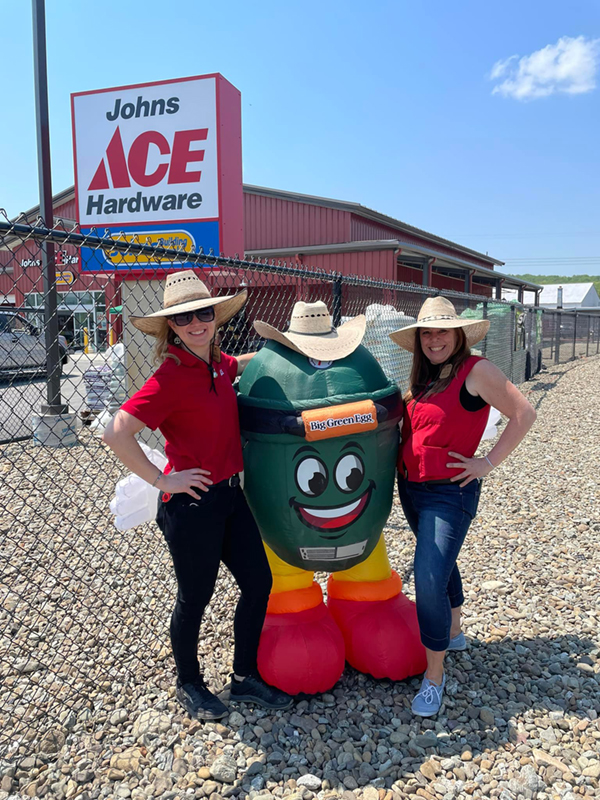
Grill days at John’s Building Supply/John’s Ace Hardware lean into fun and visibility, helping create an atmosphere that feels more like a gathering than a product demo.
Peggi-Jeanne Flood of John’s Building Supply/John’s Ace Hardware in Pittsfield, Mass., has helped turn in-store grill days into consistent traffic drivers by focusing on preparation, visibility and promotion. Here, she shares her tips from hosting about a dozen grill days throughout the year.
Treat grill days as an experience, not just a demo. While her store doesn’t run live outdoor cooking displays, Flood uses an installed indoor cookout setup to demonstrate products, show customers how equipment works and create interest around outdoor kitchens, fire pits and patio displays.
Use food to bring people into the store. Grill days are scheduled regularly, typically beginning in April and running through November, depending on the weather. No matter the day, cooking 40 to 50 burgers creates energy and encourages customers to stop, browse and stay longer.
Keep all supplies organized and ready ahead of time. A dedicated box with grilling tools, utensils and setup items helps streamline each event and keeps staff focused on customer interaction.
Make presentation part of the plan. Clean displays, intentional setup and having a tent on hand for outdoor events help the cookout feel organized rather than last-minute.
Promote early and increase visibility as the event approaches. Promotion typically begins about a week in advance, with heavier pushes in the final days through Facebook, Instagram, website promotions and, for larger events, local radio.
Post a simple menu inside the store. Listing the hours, what’s being cooked and which spices or seasonings are being used helps connect the food to products customers can purchase, especially when cooking on equipment such as a Big Green Egg.
Uses high-pressure pneumatic ice mist technology to create ultra-fine 20-micron mist for fast cooling.
Designed to reduce perceived temperature by up to 18 degrees Fahrenheit within about 10 seconds.
Powered by an 80,000 RPM motor that delivers strong, focused airflow for outdoor use.
Engineered to provide high airflow with reduced operating noise compared to traditional outdoor fans.
Built with a modular magnetic quick-detach system that allows the unit to convert for multiple uses such as cleaning, air inflation and fire-starting support.
Designed for portable use in outdoor living spaces including patios, grilling areas and camp sites.
We use cookies to ensure that we give you the best experience on our website. If you continue to use this site we will assume that you are happy with it.