
Courage to Mess With Success
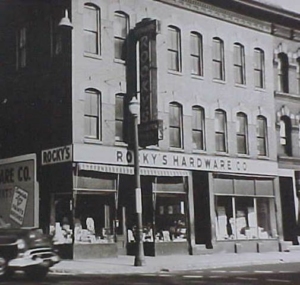
Preserving a family business sometimes means being willing to change it. For three generations, the Falcone family has guided Rocky’s Ace Hardware by recognizing that even a successful business still needs to evolve. Each generation built on what came before while adapting to what customers would need next.
Founder Rocco “Rocky” J. Falcone established the business in Springfield, Massachusetts, in 1926. His son Jim expanded it into larger home centers as the market changed. Third-generation president Rocco Falcone II later made the pivotal decision to move away from lumber, building materials and new construction to focus on maintenance and repair. Along the way came computerization, acquisitions, new markets and an operation that has grown to more than four dozen stores.
“I think it’s our ability to adapt to the current environment,” Falcone says by way of explanation. “We’re large enough to have some stability and make it through turbulent times, but small enough to react.”
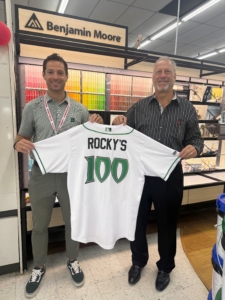
Now, with a fourth generation beginning to work its way into the business, Rocky’s is celebrating its 100th anniversary and joining the Hardware Connection Century Club. Its first 100 years offer a lesson in longevity: The Falcone family has preserved Rocky’s by knowing what should endure—and recognizing when the business around it needs to change.
CHANGING COURSE WITHOUT LOSING THE CORE
Rocky’s history provides an early example of that adaptability. In 1926, the original Rocky Falcone opened a small paint-and-hardware store at the corner of Main and Union Streets in Springfield, Massachusetts. Rocky’s Ace Hardware now enters its 100th year with 52 locations across New England, Ohio, Pennsylvania, New Jersey and Florida.
For third-gen Falcone, reaching that mark has required an enduring set of principles paired with a willingness to change almost everything else.
“My grandfather started the business with our family values,” Falcone says. “The business has been tweaked on paper, but we still have our core values. We’re very family-oriented. When people work for us, they aren’t a number. We know who they are and understand they have families.”
When the Great Depression hit shortly after the company opened, customers had less money to spend on tools needed for home repairs. Rocky’s responded by temporarily becoming Rocky’s Rental, allowing customers to rent tools and supplies rather than purchase them.

The next generation brought another transformation. The founder’s son James “Jim” Falcone became president in 1966, joined by his sister Claire Falcone, who headed marketing. During the ’70s and ’80s, Jim expanded the single-store operation into a seven-store chain in western Massachusetts and began
the company’s affiliation with Ace Hardware.
Rocky Falcone says the stores themselves evolved during that period, moving from 2,000- to 3,000-square foot neighborhood hardware retailers toward 15,000- to 20,000-square-foot home centers carrying lumber and building materials.
MAKING THE TOUGH DECISIONS
When Falcone became company president in 1992, another strategic shift followed.

“One of the big decisions was getting out of lumber and building materials and focusing on maintenance and repair instead of new construction,” he says.
Technology brought another pivotal decision. With six stores at the time, Rocky’s committed to computerizing the entire operation and introducing automatic replenishment. A century in business also leaves room for decisions that look considerably better in hindsight than others.
Falcone considers Rocky’s joint venture with Ace in 1999 among the company’s most consequential moves. Rocky’s went from eight locations to 16 in about three months as stores from the former NHD Hardware joined the company.
“Going from eight to 16 made a big impact,” Falcone says. “Doubling the size of the business demanded that we take a look at our operations and find efficiencies.”
The expansion also forced Rocky’s to rethink its management structure. Falcone could no longer personally visit every store each week, with locations now spread across multiple states. The company introduced district management, adding a leadership layer between store managers and its support center.
Other expansion efforts provided different lessons. Falcone points to Rocky’s aggressive push into Florida around 2005 and 2006 as one he would approach differently. As the economy softened, Rocky’s closed one location and abandoned plans for two additional stores whose leases had already been signed. The experience reinforced a philosophy Falcone describes as remaining flexible, avoiding overextension and “keeping our powder dry.”
GROWING WITHOUT LOSING THE NEIGHBORHOOD
Rocky’s today is significantly larger, but its growth strategy still leaves room for individual stores to reflect their communities. When Rocky’s enters an established market, it can lean on its name. In unfamiliar territory, Falcone says the company uses the recognition of the Ace brand while introducing customers to Rocky’s and then adapting the store to local demand.
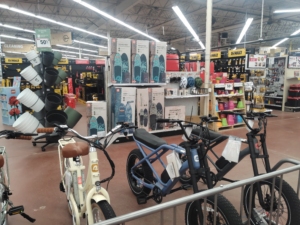 That can produce dramatically different assortments. For example, one Florida location expanded into equestrian products, while coastal stores may carry deeper fishing, camping or marine assortments. Other stores have expanded workwear, garden centers and live goods. Rocky’s current website likewise lists fishing and maritime departments at select locations rather than across the entire chain.
Acquired stores can also teach the larger company something. Falcone recalls a New Hampshire acquisition with a strong marine department that Rocky’s chose to preserve and grow. At another location, Rocky’s expanded a garden center and learned the live-goods business with help from staffers already experienced in the category. That same thinking applies to employees.
“We don’t want to lose legacy knowledge,” Falcone says.
BUILDING THE OPERATION FOR WHAT COMES NEXT
Rocky’s currently employs a little more than 900 people, about half of them part-time, according to Falcone. His hiring philosophy is straightforward: “Hire for attitude and train for skills.”
Training has expanded accordingly. Product knowledge remains important, but Rocky’s has added selling skills, as well as operational and leadership training, as customers have become more informed and their expectations have changed. Store associates are trained to understand the project behind a purchase and help customers select products appropriate to the job.
The company has also continued investing in systems that can support a larger organization. It’s upgrading its ERP platform, for instance, a decision Falcone views as serving the company’s current needs while providing room for further expansion. His approach to emerging technology follows a similar philosophy.
“Be on the leading edge, but don’t be on the bleeding edge,” he says.
Rocky’s is experimenting with AI, for example, without making a major investment before determining where it can produce value.
Meanwhile, the company continues to expand. Rocky’s entered its centennial year with 52 locations, while its new store in Manchester, Connecticut, expanded the company’s presence in the Nutmeg State to three locations.
The next generation is also moving through the organization. Falcone’s son John is director of merchandising, part of the leadership team and involved in retail processes, store oversight, growth and new locations. Falcone’s daughter Melissa and nephew Anthony DeLiso also represent the fourth generation working in the company.
After 100 years, Falcone still comes back to people when explaining what keeps him interested in hardware.
“I love the people in this industry, and I love helping solve problems,” he says. “There’s satisfaction in giving people jobs. And I have fun.”
The scale, technology and footprint would be foreign to the hardware merchant who opened that first Springfield store in 1926. The emphasis on customers, employees and
LESSONS FOR SMARTER EXPANSION
Expansion can take many forms, from adding locations and acquiring stores to entering new markets or adding categories. Rocky’s president, Rocco Falcone II, shares these five lessons for retailers considering their next move.5
1. Protect your ability to act when the right opportunity appears. Falcone describes Rocky’s philosophy as “keeping our powder dry.” Growth requires capital and management capacity, and overextending the company can limit its options when a stronger opportunity emerges. Rocky has experienced both sides: Its joint venture with Ace helped it double from eight to 16 stores over just three months in 1999, while an aggressive Florida expansion around 2005 and 2006 coincided with a weakening economy and led the company to close one location and abandon two planned stores.
2. Study the market before deciding what the store should become. Rocky’s evaluates demographics and customer needs when entering a community rather than assuming an assortment that succeeds elsewhere will transfer intact. That research has led Florida locations into equestrian merchandise, coastal stores into fishing and camping products and other locations into workwear and additional locally relevant categories. Falcone says Rocky’s continues to examine departments and layouts as it plans store renovations and looks for the investments with the best potential return.
3. Look for what an acquired business can teach you. Expansion does not require replacing everything that came before it. After acquiring a New Hampshire store with a successful marine department, Rocky’s maintained and expanded the category. At another location, the company went deeper into lawn-and-garden and live goods while drawing on the knowledge of experienced employees already there.
4. Centralize repetitive work while preserving local expertise. As Rocky’s integrates businesses, its support structure can assume functions such as accounting, purchasing and payroll. That gives store managers more time to concentrate on customers and growing the business. At the store level, however, Rocky’s listens to local teams about categories, product mixes, inventory levels and even operating hours. The objective is to gain efficiencies without discarding knowledge accumulated by people who already understand the market.
5. Build the organization for the size you intend to become. Doubling from eight to 16 locations forced Rocky’s to introduce district management because the previous structure no longer fit the company. Today, its investment in a new ERP system follows similar thinking: Falcone says Rocky’s needs a platform capable of supporting a company considerably larger than its current 52-store footprint. Expansion depends on more than finding the next location; leadership, technology and operating systems must be able to grow with it.