
Retailer2Retailer: Don’t Let Money Get in the Way of a Good Deal
The owner of Peter’s Hardware Center, which includes three southeast Florida locations, has built a career finding creative ways to finance the next opportunity.
By Peter Wernick

A lot of what I’ve learned about business goes back to my Uncle Howie, my mentor. His family had a knitting company that went back more than 100 years, and he grew it into a very successful operation.
He taught me to look for recurring revenue and recognize opportunity when others were looking in the opposite direction.
Somewhere along the way, I developed my own rule: Don’t let the money get in the way of a good deal. That means when you see a genuine opportunity, don’t immediately decide you can’t do it because you don’t have the money. Put the deal together, then figure out whether there’s a responsible way to finance it.
I learned that before I got into hardware. I was in the water treatment business in New Mexico when an opportunity led me to pitch Albertsons, the grocery giant, on placing water-vending machines outside its stores. They liked the idea and offered me 200 locations.
They asked whether I had the resources to handle it. Of course, I said yes.
I did not.
The deal required hundreds of thousands of dollars in equipment, vehicles and infrastructure. But I had a contract and knew the business, so I took the deal to my local bank. My banker believed in it and agreed to finance me.
Then the treasurer asked what would happen if the business failed and I couldn’t repay the loan. I gave her an answer that had my banker kicking me under the table.
Basically, I told her I didn’t know. If you fail, you work out the best deal you can, fix it to the best of your ability and move on.
Apparently, that was not the preferred banking answer.
I assured her I intended to succeed and would do everything in my power to make the payments. They made the loan, the business became immensely successful and five years later I sold the operation to a competitor and paid off the bank.
That lesson stayed with me when the next opportunity came along, this time in the hardware business.
How I Opened a “$5,000” Hardware Store
In 2008 and 2009, everything came to a screaming halt. My water treatment, plumbing, irrigation and well-drilling business had been doing fantastic, but it slowed dramatically and began to lose money. Businesses around my town of Palm City, Florida, were shuttering. The hardware store closed. The paint store closed.
For about two years, every Sunday when I needed something for a project around the house, I had to drive over the bridge to the larger town of Stuart to get it.
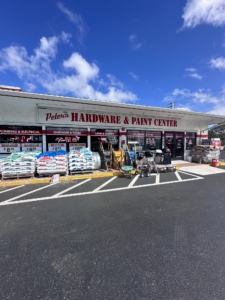 Finally, I told my wife, Angela: “Palm City needs a hardware store.”
She said, “I’m sure somebody will open one.”
“No, I think we should open one.”
“What do you know about hardware?”
Absolutely nothing. But I knew there was a need.
Her next question was better: We were already putting money into our existing business to keep it running, so where were we going to get the capital to open another one? I didn’t know.
The former hardware store in town had been abandoned with merchandise, fixtures, shelving, a paint tinter and everything else still inside. The property owner wanted the space emptied, and the contents went up for bid. I offered $5,000.
Other bidders might have wanted the merchandise. My offer included taking everything and returning the location to four empty walls. That solved the property owner’s problem.
A couple of days later, I got the email: Congratulations, you got the bid.
My wife’s reaction was basically, “Oh, my God. What are we going to do?”
We were going to open a hardware store.
The purchase was $5,000. But then it cost me about $5,000 to pack everything, another $5,000 to move it, another $5,000 to unpack it and another $5,000 to set it up.
I did it in blocks of time while I continued operating my other business and generating cash flow. Vendors and suppliers were willing to work with us. Orgill saw the vision, gave me a line of credit, invited me to their market and gave me terms that helped us fill the store.
Peter’s Hardware Center opened in September 2010. We started slowly, and we kept growing.
Set the Price. Negotiate the Terms.
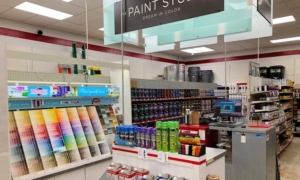
By 2013, the community was telling us something else: Palm City needed a paint store.
Space next to us became available, and I thought it made perfect sense to expand the hardware store and add paint.
Once again, my wife asked the obvious question: “What do you know about paint?”
Once again, my answer was: basically nothing. But I knew there was demand.
The landlord offered to lease me the additional space. I looked at the money I was about to put into improving somebody else’s property and asked him a different question: Why don’t you sell me the building?
He agreed.
I went home and told my wife, “We’re buying the building.”
“With what money?”
“I don’t know yet.”
 Banks weren’t interested. We were a relatively new hardware store planning an unproven expansion during a difficult lending environment. So I went back to the landlord. He set the price. I set the terms.
He owned the building free and clear, which gave us flexibility. We negotiated seller financing. I was supposed to put $50,000 down, but I didn’t have $50,000. He agreed to let me make the down payment in $10,000 blocks. I even took a $10,000 cash advance on a credit card to make the initial payment and get the papers signed.
Over time, I kept making the payments. When interest rates changed, we renegotiated. Eventually, I paid him off. Today, I own the building free and clear.
That’s what I mean when I say don’t let the money get in the way of a good deal.
This sensibility isn’t about pretending money doesn’t matter. You have to know what you’re buying. You have to understand the opportunity. You have to be willing to walk away when the numbers become too much. But sometimes we start with the money question when we should start with the opportunity question.
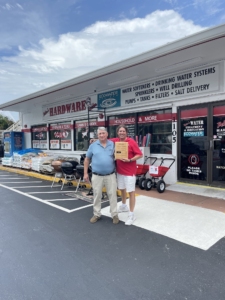
If there’s a good deal in front of you, figure out what it’ll take to make it work. Talk to the seller. Talk to the vendors. Talk to your distributor. Talk to the bank. Look at the assets. Look at the terms. Find out what the other person needs from the deal.
And if somebody agrees to work with you, execute.
If you shake hands and say you’re going to come up with the money, come up with the money. If you say you’re going to make the payments, make the payments. Your reputation and your credit become tools you can use the next time an opportunity comes along.
I’ve spent my career looking at opportunities that I couldn’t necessarily afford when I first saw them.
The question I ask is: Is it a good deal?
If the answer is yes, I start figuring out how to get it done.
Seven Tips for Financing a Good Deal
1. Investigate the seller before you negotiate. Learn as much as possible about the seller’s financial position. For real estate, determine whether there is an outstanding mortgage or other obligations tied to the property. For a business, find out whether loans or other parties have a financial interest. An asset owned free and clear can give a seller more latitude to negotiate financing or payment terms, while existing lenders may limit the options available.
2. Separate the price from the terms. The purchase price is one part of a deal. The down payment, interest rate, payment schedule and length of financing can determine whether that price is workable. Find out which elements matter most to the seller and identify where there may be room to negotiate. A seller may value steady income, a faster transaction or another benefit enough to accept terms that make the purchase more manageable for the buyer.
3. Look beyond conventional financing. A bank declining to finance a purchase does not necessarily mean the underlying opportunity is a poor one. Depending on the transaction, alternatives such as seller financing or a negotiated payment schedule may provide another path. You should still carefully evaluate unconventional financing, with appropriate legal, accounting and financial guidance, before signing an agreement.
4. Know how much the business can actually support. Gather enough financial information to determine whether the business can handle the obligation while continuing to fund inventory, payroll and everyday operations. Build room for circumstances that don’t follow the original projection. Peter Wernick’s rule is straightforward: If the deal gets “over your skis,” don’t agree to it.
5. Be willing to walk away. Creative financing should make a sound opportunity possible rather than make an unsound opportunity appear affordable. Establish the point at which the numbers stop working before becoming emotionally committed to the purchase. Walking away from one transaction also preserves capital and borrowing capacity for another opportunity.
6. Treat credit and reputation as business assets. Good credit can provide leverage when an opportunity appears, while strong relationships with lenders, vendors, distributors and other business partners can create options that might not otherwise exist. Build those relationships before you need financing, and protect them by meeting commitments consistently.
7. Once you make the deal, execute. Creative terms do not change the obligation to deliver. Put agreements in writing, track payment dates and financing milestones and understand when terms may need to be renegotiated. As Wernick puts it, once someone shakes your hand and agrees to work with you, “you’ve got to follow up and actually do what you say you’re going to do.”
Peter Wernick is the owner of Peter’s Hardware Center in Palm City, Florida, which he opened in 2010 after a career in plumbing and water treatment. His wife has repeatedly responded to his expansion plans with some variation of “with what money?”—a question Wernick has spent much of his career finding creative ways to answer.