
Conversations That Move the Industry
Every Independent Home Improvement Conference (IHI Conference) agenda features educational sessions, keynote presentations and networking events. Equally valuable are the conversations that happen between them—around breakfast tables, in the Partner Pavilion, after a session wraps up or while walking the show floor.
Throughout the sessions in Orlando, Florida, the IHI Conference gives independent retailers direct access to the executives, innovators and decision-makers helping shape the future of the channel. Those exchanges spark new ideas, challenge assumptions and give attendees fresh perspectives to bring back home.
To capture a few of those conversations, Hardware Connection asked a group of industry leaders a few questions, very much like the conversations they’ll have on the conference floor. Their responses reflect the priorities shaping the independent channel today, from leadership and technology to merchandising, operations and customer experience.
For those with us in Orlando, these pages will likely prompt some follow-up questions and further explorations when talking with these industry leaders. For everyone else, consider this a small taste of the ideas, insights and access to high-placed executives that define the IHI Conference experience.
Boyden Moore
 President and CEO, Orgill
Hardware Connection: Orgill’s Wholesale Partner Day has become an important part of the IHI experience. What do you hope retailers walk away with after spending that first day learning from your team and their peers?
Moore: We just love the opportunity to connect with our customers midyear and see how it’s progressing. Of course, we’re happy to share our perspectives and discuss opportunities to grow together, but I’d say we learn as much as anyone from listening to the perspectives shared at the IHI Conference both onstage and in more casual conversations. Independent retailers compete against some of the largest companies in the world. In your view, what continues to make this channel uniquely positioned to succeed, and where does collaboration play a role in that success?
Independent retailers have a lot of advantages in how they customize their assortments, promotions, pricing strategies and services to their local markets or targeted customers. Additionally, the agility independent retailers have in adapting to trends or opportunities is unmatched by the large companies. We collaborate with our customers on their chosen strategies and work to help them execute the strategic differentiators that give them a competitive advantage.
What topic or conversation are you most eager to explore during the IHI Conference?
I don’t know that there is one topic. Every conversation at the IHI Conference offers an opportunity to learn something new. I usually walk away with a lot of ideas anytime I’m around a gathering of the best independent retailers in the world—both ideas that we can help leverage and new things we should explore.
Dan Tratensek
 Chief Operating Officer, NHPA
Hardware Connection: Your State of the Industry presentation will highlight the trends shaping independent home improvement. What’s one development from the past year that surprised you most—and why should retailers pay attention?
Tratensek: One of the most important things is that the way consumers are interacting with their businesses is fundamentally changing. Retailers need to recognize these changes and adapt to them. For example, all our data show that transaction counts are in consistent decline. It has been something like ten straight quarters where retailers are reporting this slowdown in footsteps. At the same time, transaction size has trended up. What this means is that consumers are simply visiting stores less frequently than they used to but are tending to buy more while they are there.
So if a retailer isn’t asking questions like “how do I improve my closure rate, how do I drive basket size even higher or what can I do through marketing, promotions and advertising to drive footsteps,” they’re putting themselves at a serious disadvantage. And this is just one example of how things are evolving. But it’s a critical example of a fundamental change in behavior that can have a major impact on a retailer’s sales and profitability if not addressed.
This year’s IHI Conference marks a meaningful milestone as you prepare to retire after a career spent serving independent retailers. When you think about the conference’s evolution, what makes you most optimistic about the future of the industry and the role IHI will continue to play?
I’ve been a part of this industry for 30 years now, and I’ve seen a lot of changes: the rise of the big boxes, the emergence of e-commerce, the housing market crash, the pandemic and now things like AI. One thing that has been a constant has been the ability of independent retailers to react and respond as the market evolves.
Sometimes this has happened more slowly than I would like it to, but every time, independent retailers have leaned into their agility, responded to challenges and continued to remain a vibrant part of the channel. A big reason for this agility and their ability to respond to market shifts is the support these independent retailers continue to get from their channel partners—their wholesalers, vendors and their association. On top of that, they have always leaned on each other in the past, looking to their peers for advice, insights and ways to build the scale they need to compete.
I think the IHI Conference is an offshoot of that. It’s a living example of independent retailers coming together with the rest of the channel to support one another, share ideas and continue to address changes and challenges head-on.
What topic or conversation are you most eager to explore during the IHI Conference?
Solutions for driving more footsteps, converting more sales and increasing basket size are all very critical right now. I also think AI is having such a rapid and meaningful impact on society and business that it’s always interesting to hear updates on what best-in-class retailers are doing with this technology to drive innovation and better manage their operations.
And while AI is kind of the “sexy” topic right now, solid retailing also comes down to being able to do the basics right: attract customers, provide good service and manage your team at the highest levels. So while these topics might not be as glamorous as how AI or robots can help you create efficiencies, they’re still the heart of what high-performance retailing is all about.
Eric Lane
 Vice President of Field Sales, Do it Best Group
Hardware Connection: One of the advantages of a member-owned co-op is having direct access to leadership. How important is that two-way conversation, and what do you hope retailers bring to discussions like you’ll have at the IHI Conference?
Lane: That two-way conversation is essential. One of the great strengths of Do it Best Group is that our relationship with members goes well beyond the transactional phase. It goes much farther than just selling products in their stores. We are working alongside independent business owners who are making real decisions every day about how to grow, how to serve their communities, how to manage costs, how to compete and how to protect the independence that makes their businesses special.
For us, direct access to leadership is not just about being available. It’s about listening carefully enough to understand what’s really happening at the store level and then using that insight to make better decisions as a company. The best ideas often come from those conversations because retailers are closest to the customer, closest to the competitive pressures and closest to the opportunities.
At the IHI Conference, I hope retailers bring candor. Bring us what is working, what is frustrating, where you see opportunity and where you need stronger support. The more direct and specific the feedback, the better we can align our programs, services, field support, merchandising, marketing and operational resources around what helps independent retailers run better businesses.
After spending the latest phase of your career helping independent retailers connect with customers through marketing, you’re now leading field sales and working directly with retailers every day. Has that changed the way you think about the role cooperation plays in strengthening the independent channel?
I’ve been fortunate to spend a lot of my career working closely with independent retailers, particularly through sales leadership roles. More recently, I had the opportunity to help lead our marketing efforts following the True Value acquisition, which gave me an even deeper appreciation for how important it is for independent retailers to connect with customers in clear, compelling and relevant ways.
Stepping back into field sales has really reinforced how connected all that work is. Marketing matters because it helps retailers tell their story, drive traffic and build loyalty. Field sales matters because it brings those ideas into the day-to-day realities of each business. And collaboration matters because independent retailers need both the freedom to run their businesses their way and the support, scale, programs and resources that help them compete more effectively. What I see every day is that these retailers are entrepreneurial, resilient and deeply committed to their communities. But they are also managing a lot at once, including customer expectations, labor challenges, pricing pressure, inventory, technology, competition and growth opportunities.
The role of Do it Best Group is to help make that load more manageable and help them move their businesses forward. So yes, my perspective continues to evolve, but the core belief has not changed. The independent channel is strongest when retailers are not trying to solve every challenge alone. Our job is to listen, understand what they’re facing and bring them practical solutions that help them grow profitably, operate with confidence and compete on their own terms.
What topic or conversation are you most eager to explore during the IHI Conference?
How independent retailers continue to differentiate in a market that keeps getting more complex. There is no single answer to that question. For some retailers, it may be stronger customer engagement. For others, it may be better use of technology, sharper assortments, improved inventory productivity, stronger paint and LBM programs, a more effective digital presence or a more disciplined approach to local marketing. What the IHI Conference does well is bring those perspectives together so retailers can learn from one
another, not just from the stage.
From a Do it Best Group standpoint, I’m especially interested to hear where retailers see the greatest need for practical support. What would help them make better decisions, serve customers faster, capture more share in their local market, simplify their operations? The independent channel has always been built on people who are willing to adapt while staying true to what makes their businesses unique. That’s the conversation I’m looking forward to most: How do we help retailers keep that independence strong while giving them more ways to be better for their business?
David Mobley
Executive Vice President—Sales, Orgill
Hardware Connection: You spend much of your time working alongside retailers in their businesses. Across the stores you’ve visited this year, what’s one change or adaptation successful retailers have made in the current market environment?
Mobley: The biggest adaptation isn’t hardware—it’s digital execution. Successful dealers are leaning heavily into modernizing their back-end technology—from automated inventory replenishment to streamlined mobile checkout and integrated item files—to eliminate operational friction. Crucially, they’re doing this in a way that automates the repetitive busywork so their store associates can spend more face-to-face time with customers on the floor. They’re proving that high-tech efficiency and high-touch local service aren’t mutually exclusive; they’re complementary.
You’ve also built much of your career around helping retailers grow profitably. What’s an opportunity independent retailers might be leaving on the table these days?
The biggest opportunity independent retailers are leaving on the table is capturing and structuring commercial and pro business with the same discipline they apply to consumer retail. Many independent stores treat contractor business as just a large-volume retail sale—offering generic discounts without formalizing the relationship.
Winning in today’s environment requires building dedicated pro pipelines: offering integrated jobsite fulfillment, automated order staging, specialized commercial SKU depth and customized digital ordering portals. Pros prioritize reliability, speed and billing efficiency over a minor price variance. Independent dealers who build professionalized, frictionless commercial programs are capturing sticky, high-margin revenue while their competitors fight for fluctuating foot traffic.
What’s one topic or conversation you’re most eager to explore this year?
Diving deep into conversations about how independent retailers can practically harness AI and back-end automation without losing their local, high-touch advantage. Everyone in our industry recognizes that tech is evolving rapidly, but the real challenge for an independent dealer is implementation—how to use automated tools to streamline inventory planning, order processing and administrative workflows so their staff can spend more time on the floor with customers. I want to exchange ideas on how we, as an industry partner, can continue building seamless, secure technology solutions that remove operational friction for store owners and give them a distinct competitive edge.
Sharms Bala
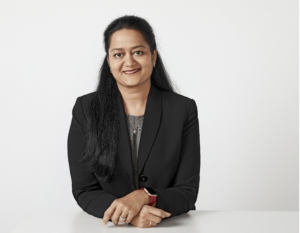 Chief Digital and Information Officer, Orgill
Hardware Connection: As part of your upcoming presentation during IHI Partner Day, you look at the big picture at Orgill. Without giving too much away, what’s been your biggest takeaway or insight from having that enterprise-wide perspective?
Bala: Seeing how connected every part of the business really is. Technology is an important part of the equation, but what has impressed me most is how closely our teams work together with a shared focus on helping our customers succeed. When you step back and look across the enterprise, you realize that the best innovations aren’t about a single technology or department.
They happen when people, processes and technology come together to solve business challenges and better serve our customers. That’s what excites me most about where we’re headed. One theme that came through in our conversation earlier this year was building technology that scales without becoming more complicated.
How do you see balancing giving retailers more powerful tools while keeping those tools simple enough to fit businesses of every size?
Simplicity must be intentional. As technology becomes more embedded, there’s a natural tendency to add more features and complexity. Our responsibility is to make sure those advances actually make life easier for retailers. That means designing solutions that are intuitive, flexible and scalable, whether someone operates a single store or a large multilocation business. A good example is creating technology that works efficiently behind the scenes, so retailers spend less time navigating multiple systems and more time focusing on their customers and growing their business.
What’s one topic or conversation you’re most eager to explore this year?
Since this will be my first IHI Conference, I’m especially looking forward to hearing directly from retailers about the opportunities and challenges they’re seeing in today’s market. I’m always interested in conversations about how technology can simplify day-to-day operations, giving retailers more time to focus on serving their customers and strengthening their communities. Those real-world experiences often spark the best ideas for where we should be heading next.
Greg Stine
 Executive Vice President of Marketing & Communications, Orgill
Hardware Connection: Retailers are inundated with advice, trends and technology. From a marketing and brand perspective, what trend or technology represents legitimate opportunities?
Stine: Branding fundamentals will always matter more than the latest trend or technology. Retailers with a distinctive brand—one they clearly define, consistently communicate and reinforce through every customer touchpoint—will always have an advantage. For independent retailers especially, a strong brand isn’t a luxury; it’s the foundation that differentiates them from big-box competitors.
Technology should strengthen that foundation, not replace it. AI, personalization, digital marketing and e-commerce tools all offer tremendous opportunities, but only when they’re aligned with a clear brand strategy and focused on improving the customer experience. If there’s one area where retailers can consistently generate results, it’s loyalty marketing. Existing customers are almost always the most valuable customers.
Whether they’re using Orgill’s FanBuilder platform—custom-branded for each independent retailer—or another proven customer loyalty program, dealers should be leveraging these tools to stay connected with customers, deliver relevant offers and give shoppers compelling reasons to return. Driving repeat visits from existing customers remains one of the highest-return marketing investments a retailer can make.
A goal of Orgill’s Innovation Center is to bring retailers and vendors together in a more collaborative environment. What’s been the biggest success story or takeaway from those collaborations so far?
Seeing what’s possible when you bring every part of the independent channel together under one roof. That came to life during our Built for Summer event in May. The event brought together a few hundred Orgill dealers during one of the busiest times of the retail year. Beyond the buying event itself, attendees had the opportunity to meet one-on-one with Orgill service experts, explore our three concept stores and collaborate with vendors in a hands-on environment designed to generate ideas they could immediately take back to their businesses.
What made the event especially meaningful, however, was everything happening around it. At the same time, the Innovation Center hosted Cleveland Research focus groups examining the future of retail and a Home Improvement Research Institute board meeting. Dealers, vendors, researchers and industry leaders were all sharing ideas in the same building, creating conversations that simply wouldn’t have been able to happen in a traditional conference setting. That’s exactly what we envisioned when we created the Innovation Center. Our long-term goal is for it to become the home of the independent home improvement channel—a place where learning, innovation, collaboration and industry leadership come together. During those three days in May, we saw that vision become a reality.
What’s one topic or conversation you’re most eager to explore this year?
I’m most interested in the conversations around the future of the independent channel and how retailers, wholesalers, manufacturers and industry organizations can work together to strengthen it. The past year has brought significant disruption to the independent channel. While those events have created uncertainty, they’ve also created an opportunity for the industry to think differently about collaboration.
One of the things I value most about the IHI Conference is that it brings together people from every corner of the channel. I look forward to hearing perspectives from dealers of every affiliation and discussing the challenges and opportunities we all share. At the end of the day, independent retailers compete far more with big-box chains and online marketplaces than they do with one another. The stronger we become as an industry—sharing ideas, identifying common challenges and learning from one another—the stronger every independent retailer will be.
Kelley Stone-Castro
 Strategic Accounts Manager, WD-40 Company
Hardware Connection: Earlier this year, Steve Brass, WD-40’s CEO, said in a Hardware Connection interview that WD-40’s success is tied to the success of its retail partners. As you work with retailers across the country, what’s one opportunity you think independent stores are still leaving on the table?
Stone-Castro: One of the biggest opportunities is merchandising products where the customer is already thinking about the task, not simply where the category has traditionally lived.
Independent retailers are exceptionally good at understanding their local customers, but many still rely heavily on the primary shelf to generate sales. Secondary placements near tools, equipment, seasonal projects or
problem-solving destinations can help shoppers discover the right product at the exact moment of need. We have seen that thoughtful, task-based merchandising can create meaningful incremental growth. It does not always require more space or deeper discounting. Often, it’s about connecting the product to the project and making the solution easier for the shopper to find. Independent retailers have the agility to test, learn and act quickly. That’s a competitive advantage they should continue to lean into.
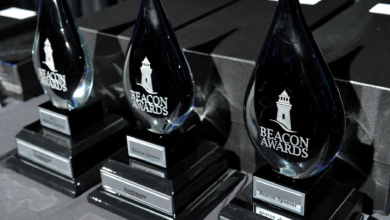
WD-40 has long been recognized as a leader in using digital channels to educate, engage and build community around its brand. What does it mean for WD-40 to sponsor the Digital Beacon Awards and recognize independent retailers who bring that same spirit of innovation to their own businesses?
For WD-40 [the brand], education and engagement have always been central to how we build trust with end users. Sponsoring the Digital Beacon Awards gives us an opportunity to celebrate independent retailers who apply that same mindset within their own communities. Digital innovation is not simply about having the newest platform or the largest following. It’s about using technology to solve problems, share knowledge, strengthen relationships and make the customer experience better. Independent retailers have a unique ability to combine digital reach with authentic local relationships.
Recognizing those who are doing this reinforces the importance of experimentation, creativity and continued learning across the industry. Their innovation helps keep the independent channel relevant, connected and positioned for future growth, and that is something WD-40 [the company] is proud to support.
What’s one topic or conversation you’re most eager to explore this year?
How independent retailers can make product knowledge more relevant for today’s shopper. We already have tools that make information easier to access, but the greatest opportunity is helping people understand products within the context of their everyday needs. Shoppers are not always thinking about a specific product category—they’re thinking about a squeaky hinge, a rusted bolt, equipment that needs maintenance or a project they want to complete. I’m interested in discussing how we can better connect digital education, in-store merchandising and associate knowledge of uses versus features to those real-world moments. When we make it easier for customers to understand not only what a product is, but how it can help them solve a recurring need or problem, we create greater confidence, stronger engagement and more opportunities for growth.