
Yin and Yang of Running a Hardware Store

Set on Taft’s west side in the heart of California oil country, Cooper’s True Value stands as a locally rooted alternative to big-box chains miles away in Bakersfield, giving the community a dependable hometown hardware option close to home.
How two brothers keep Cooper’s True Value steady in a constantly changing hometown of Taft, Calif.
When King and Patti Cooper packed up their family in 1977 and moved to Taft, Calif., their goal was simple: open a hardware store that felt like home. Coast to Coast Hardware, located in the then-thriving Westside Shopping Center, quickly became known for name-brand products, reliability and the kind of customer service that only a family operation can deliver.
Nearly 50 years later, that legacy continues at Cooper’s True Value Home Center—now led by brothers Eric and Jeff Cooper, who have shaped the business through a partnership that is equal parts contrast and complement. Their self-described “yin and yang” relationship is the quiet engine behind a store that has survived retail consolidation, demographic change and shifting local economics.
“It works because we’re different,” Eric says. “Jeff is the CFO—he pays the bills. I do the buying, so he pays for what I order. It’s a pretty good system.”
That balance began shaping the business long before they were in charge. In 1997, the family purchased the vacant Memory Lanes Bowling Alley and converted the 20,000-square-foot building into a larger, more flexible hardware store. Shortly afterward, Coast to Coast turned to True Value as a co-op, giving the Coopers access to broader assortments while still operating with the same small-town ethos their customers valued.
A Store That Moves with Its Community
Taft is a small, isolated community in California’s oil fields—close enough to Bakersfield to feel the pull of big-box competition but far enough away that local retailers have always played an outsized role. The challenges of 2025 reflect this tension.
“The first part of the year was down, and that was pretty common across the board,” Eric says. “Business has picked up the past few months, but we’re still slightly down overall. In California, the state government doesn’t make things easy for industries tied to oil.”
Adding to the pressure: Taft recently lost its only pharmacy chain when the local Rite Aid closed. Tractor Supply arrived just four months ago, altering existing niches overnight. Dollar stores—five of them in a town of 16,000—also reshaped demand. For a retailer without many True Value or Do it Best peers nearby, staying relevant requires constant adaptation.

Brothers Eric, (right) and Jeff Cooper (left) — owners of Cooper’s True Value — helped keep tradition alive in Taft, Calif., by funding the 2024 July fireworks show, supporting their community and lighting up the town together.
“Brick-and-mortar is challenged everywhere, but especially in a small community,” Eric says. “You’ve got to evolve with what the area needs.”
Over the years, that evolution has taken many forms. A once-thriving garden center shifted as the region’s demographics changed. An influx of Hispanic farmworkers brought new buying habits and required the hiring of more bilingual employees. When Kmart closed, it left a hole in everyday goods that the Coopers rushed to fill.
“That change dictated a lot,” Eric says. “Now we carry small appliances, vacuums and housewares—items that sold well at Kmart and suddenly had nowhere else to go.”
Farm and ranch supplies, long a reliable niche supported by True Value programs, were strong until Tractor Supply entered the market. Still, the store does well with higher-priced everyday goods that dollar stores won’t carry. Paint and lawn products remain top performers, supported by a reputation for depth and consistency.
“I do really well with the stuff the dollar stores don’t carry,” Eric says. “People know us for selection and for being steady. We’ve been here almost 50 years—customers trust us.”
The Brothers’ Operating Style
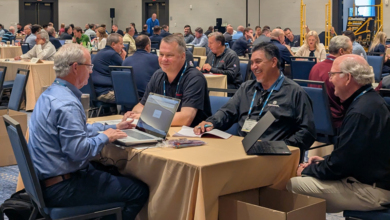
Hardware Connection caught up with the brothers at the Do it Best/True Value Fall Market in Indianapolis this past September, and they shared their buying strategy. Eric and Jeff’s business partnership is rooted in routine: during markets, they meet constantly to align decisions, compare notes and avoid duplicating work. In the tight margins of small-town retail, this discipline matters.
“That’s the whole reason we meet up during the show—to make sure we’re not buying the same thing twice,” Eric says with a laugh. “We’ve been doing this since the ’70s. We know what the area supports and shop the markets based on that.”
Eric thrives on assortments, niches and customer-facing decisions; Jeff keeps the financial engine running. The push-pull works because neither brother tries to be the other.

Inside Cooper’s True Value, the remodeled former bowling alley now stretches into a wide-open hardware floor where every aisle reflects the community’s needs.
Looking Ahead—With Eyes on the Next Chapter
The biggest strategic question looming over the business isn’t competition or economic pressure—but time.
“We’re both in our late fifties and sixties,” Eric says. “So, the focus now is deciding how we want to move forward with the business. We’re always looking at niches and opportunities, but we’re also thinking about longevity.”
AI has already become part of that thinking. The Coopers began using it for internal tasks—policy writing, document cleanup, community outreach—and are watching how other hardware retailers apply it to marketing and inventory analysis.
“We’re just scratching the surface,” Eric says. “But you can see how powerful it’s going to be.”
A Steady Center in a Shifting Retail Landscape
In a community where big chains come and go, Cooper’s True Value remains anchored by family, familiarity and a continually updated understanding of the town it serves. The Coopers have seen recessions, closures, demographic shifts and new competitors. But they’ve also seen customers grow up, raise families and keep returning.
That durability might come from the store’s product mix—but it comes just as much from the balance between two brothers who approach the business from different angles, working together with the ease that comes only from decades of shared responsibility.
“It’s worked for nearly 50 years,” Eric says. “We try to stay steady, stay flexible and stay part of Taft. That’s what keeps us going.”