Special Section: Winter Products Report
For all the sophistication available to forecast and manage inventory, few hardware categories remain as dependent on one uncontrollable variable as winter products. When winter shows up, demand can move quickly. National Retail Federation and Planalytics data showed just how quickly during February 2025.
With the coldest February temperatures since 2022 and the most snowfall since 2021, weather-driven demand for ice melt jumped 48% compared with the previous year. Demand for heaters increased 17%, while boots rose 16%. Those swings help explain why winter remains a distinctive marketplace for independent hardware retailers. The assortment encompasses products customers use to prepare their homes before temperatures fall, products they need when snow and ice arrive and products purchased when winter creates an immediate problem.
That puts traditional categories such as snow shovels, ice melt and scrapers alongside pipe insulation, weatherstripping, window insulation kits, portable heat, workwear, emergency power and automotive products. Battery-powered snow removal is adding another layer to the mix. Cold-weather assortment considerations also extended into insulated jackets, bibs and gloves designed for contractors and others working outside.
For independent retailers, that makes winterizing less a single category than a collection of categories connected by the same customer need: getting through cold weather safely and keeping homes, vehicles and jobsites operating.
SALT SUPPLY GETS TESTED
Ice melt might be the product that provides the clearest example of the volatility retailers face. The U.S. Geological Survey entered the 2025-26 winter expecting that rock-salt demand could increase slightly in some parts of the country based on seasonal weather forecasts. The agency noted that a weak La Niña historically favors storm tracks across the northern United States. The real winter season eventually provided a more demanding test.
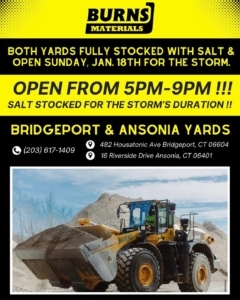
By January 2026, sustained cold and snow had strained salt supplies in portions of the Northeast and Midwest. In Connecticut, retailers reported heavy demand for salt and ice melt following a major winter storm. For example, Goody’s True Value Hardware in East Haven had received 72 pallets of salt— with 50 bags per pallet—and was expecting another shipment, even as customers reported finding other stores sold out. Burns Materials in Ansonia, Connecticut, remained stocked but reported difficulty sourcing salt from suppliers.
The problem extended farther up the supply chain. Cargill’s salt mine beneath Lake Erie, which produces 3 million to 4 million tons annually and supplies markets throughout the Great Lakes and Northeast, was operating through unusually heavy demand after an early and persistent winter depleted customers’ normal reserves. That doesn’t point to a permanent shortage of salt. It demonstrates how quickly availability can tighten when repeated storms compress demand into a short period.
For hardware retailers, likewise, ice melt represents a broader assortment than rock salt alone. Current products include traditional sodium chloride alongside calcium chloride, magnesium chloride, blended formulations and chloride- free alternatives, with various products differentiated by their effective temperature, application, surface considerations and pet- related concerns.
The assortment therefore carries commodity and specialty-product characteristics. A bag of rock salt may satisfy the basic need, while customers concerned about concrete, landscaping, pets or lower-temperature performance may be looking for a different formulation.
THE WINTER AISLE GETS WIDER
Snow removal itself is changing as cordless technology moves into another traditionally manual category. Battery-powered snow shovels provide an option between hand shoveling and a full-size snowblower. That progression mirrors what has already happened throughout outdoor power equipment: Consumers who own a battery platform can increasingly extend it into seasonal tools. For hardware retailers already selling cordless lawn equipment, snow products can keep those battery ecosystems relevant after mowing season ends.
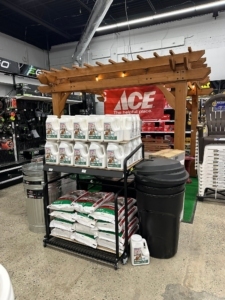
Sholes Ace Hardware & Supply in Brooklyn, Connecticut, puts its ice melt front and center, making heavy bags easy to grab, while a well-stocked display signals to customers that the store is ready when winter weather hits.
Winter preparedness also reaches inside the house. Weatherstripping, pipe insulation, window-film kits, foam tape and other relatively inexpensive products address heat loss and freeze protection. Portable heaters, heat lamps and related products answer another immediate cold-weather need, while generators, batteries, flashlights and emergency supplies extend the category into power-outage preparedness.
Automotive winter preparedness adds still another branch. Ice scrapers, snow brushes, windshield products, battery chargers and portable jump starters address problems that often emerge the moment temperatures plunge.
That breadth matters in a marketplace where snowfall itself can vary dramatically from year to year. A retailer may have little need for snow shovels during a mild winter but still see customers looking for weatherstripping, pipe protection or heating products when temperatures fall. The underlying opportunity is therefore bigger than snowfall.
NRF and Planalytics characterize weather as a measurable driver of retail demand and note that retailers increasingly use weather analytics to anticipate changes in product demand and inventory needs. Their research emphasizes that ordinary variations in temperature and precipitation—not simply headline-making storms—account for much of weather-related sales volatility.
For independent hardware retailers, winter remains a market built around consumer needs that can become urgent almost overnight. The forecast will change. The snowfall total will change. Salt supplies can tighten, and a mild December can turn into a punishing January. But homes will still need to be protected from freezing temperatures, sidewalks kept passable, vehicles started and customers kept warm. That makes winterizing one of hardware retail’s most unpredictable categories—and one of its most enduring.
EL NIÑO AND PREDICTING THE UNPREDICTABLE
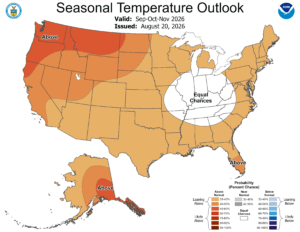
Retailers making winter inventory decisions have a significant weather pattern to watch: a strengthening El Niño. NOAA’s Climate Prediction Center says there is a greater than 90% chance El Niño will become very strong during fall and winter 2026-27. By the core winter months, NOAA expects the pattern to increasingly influence temperatures and precipitation across the country. For December through February, above-normal temperatures are favored across much of the northern tier, with probabilities exceeding 50% from the Pacific Northwest to the Northeast. The southern U.S. presents a different picture, with El Niño reducing the likelihood of above-normal temperatures and much of the Southeast favored for near-normal conditions.
Precipitation may be particularly important for winter-product demand. NOAA expects the odds of above-normal precipitation to increase across the southern tier as winter progresses, with a strong wet signal developing across California and the Southeast. Above-normal precipitation is also favored along much of the East Coast beginning in November and running through January. Parts of the Great Lakes, meanwhile, tilt toward below-normal precipitation. One important caveat: Seasonal forecasts paint with a broad brush. They can tell you winter may be wetter or warmer, but they won’t tell you when half the town will show up looking for ice melt. Even a very strong El Niño doesn’t guarantee a particular outcome in any one market.
5 TIPS TO TURN COLD WEATHER INTO HOT SALES
Winter weather may be unpredictable, but retailers can prepare by building an assortment that fits their market, making seasonal products prominent and being ready when demand suddenly spikes. Here, retailers share their tips for making the most of sales when temperatures drop.
1. Give winter merchandise your best real estate. Mike Kolovich of Champion Ace in Warren, Ohio, puts pallets of ice melt on the sidewalk weeks before the first snowflake falls. Whitney McBride of Markle Hardware & Rental in Markle, Indiana, converts a highly visible seasonal section behind the main register from pool supplies to winter products. Virginia Patnode MacFawn of Rangeley Lakes Builders Supply Co. in Rangeley, Maine, moves winter merchandise into garage bays at the front of the store and continually changes endcaps with the season.
2. Build an assortment you can support. Champion ACE concentrates on snow shovels and ice melt and skips snowblowers because the store doesn’t have the ability to repair them. Kolovich focuses on winter categories his operation can stand behind.
3. Think beyond snow removal. Markle Hardware & Rental complements shovels, ice melt and scrapers with insulation, foam tape and window winterizing kits. Patnode MacFawn also includes fuel storage and seasonal home products in the winter mix.
4. Stock for the emergency, not the average day. Kevin Wagner of Clements Ferry Ace Hardware on Daniel Island, South Carolina, saw ice scrapers and snow shovels sell out within eight hours when winter weather arrived after a long stretch without significant snow. In Maine, Patnode MacFawn similarly emphasizes having a deep selection of ice melt, shovels, pushers and other snow products available when customers suddenly need them.
5. Make incentives part of the merchandising. Ben Fowler of Moore Lumber & Ace Hardware in Castle Rock, Colorado, says a state incentive for electric outdoor power equipment has helped drive the category. During winter, the store brings qualifying products front and center and uses large, bright signage to make customers aware of the savings.