
Market Report: Grasping Opportunity in Hand Tools
Replacement demand and broad professional use keep the hand tool market growing, while product development and rising costs continue to reshape the category. Hand tools occupy an unusual position in the hardware store. A homeowner may postpone buying a new power tool or delay a major project, but a contractor with a worn-out pair of pliers, a missing socket or a broken screwdriver still needs a replacement.
That everyday utility helps keep the category moving across a wide range of users and applications.
Grand View Research estimates the U.S. hand tools market generated $5.87 billion in revenue in 2025 and will reach about $6.16 billion in 2026. The research firm projects a 5.1% compound annual growth rate through 2033, when the market is forecast to reach $8.71 billion.
Wrenches and spanners represented the largest U.S. product segment in 2025, according to Grand View Research, while pliers and pincers are projected to be the fastest-growing segment.
A September 2026 analysis from Arizton, a market research and consulting firm that tracks the U.S. and global hand tools industries, reinforces the importance of the products found throughout a traditional hardware hand tool department. General-purpose tools accounted for about 64% of the U.S. market in 2025, with pliers representing the largest share within that segment. Demand extends across construction, automotive repair, industrial maintenance, utilities, manufacturing and residential users.
A Mature Category Keeps Evolving
A pair of pliers remains fundamentally recognizable as the same tool generations of customers have carried in their toolboxes, but that does not mean product development has stopped.
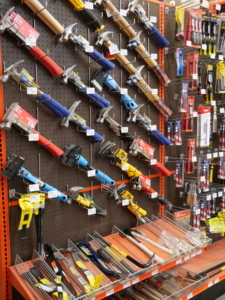 Manufacturers continue to refine tools around the way tradespeople work, with product development emphasizing durability, performance and productivity. That can mean improvements to leverage, cutting performance, grip and ergonomics, along with tools designed for increasingly specialized applications.
A broad hand tool assortment lets retailers serve both customers looking for an everyday replacement and professionals seeking specialized features, greater durability and higher performance.
In an interview with Hardware Connection earlier in the year, Ryan DeArment, executive vice president of sales and marketing for Channellock, says he expects hand tool development to become increasingly trade-focused and productivity-oriented. He also sees a sharper distinction developing between products aimed at DIY customers and premium tools intended for professionals, who may put greater value on durability, performance and warranties.
That segmentation gives hardware retailers room to build assortments around different customers rather than treating a product such as pliers as a single purchasing decision. A homeowner replacing a basic pair of slip-joint pliers and an electrician buying a tool that will be used daily arrive with different expectations about features, durability and price.
For independent retailers, understanding those differences becomes especially important as higher acquisition costs put more pressure on both retail prices and margins.
Pricing Takes Center Stage
One of the biggest hand tool stories of 2026 is cost.
The Producer Price Index for hand and edge tools reached 333.664 in September 2026, according to U.S. Bureau of Labor Statistics data, up 5% from 317.751 a year earlier and about 4% since December. The increase followed substantial gains during 2025, extending pricing pressure into another year.
Steel is central to the price equation. Pliers, wrenches, sockets, hammers, files and many other hand tools rely heavily on steel and forged metal components, leaving the category exposed to changes in material costs and trade policy.
Section 232 tariffs affecting steel and certain derivative products have added another cost variable, although the duty on an individual finished tool depends on its classification, country of origin and other factors.
Independent hardware retailers are seeing the effects beyond the hand tool aisle. A couple examples: Brownsboro Hardware & Paint owner Doug Carroll reported that his business had moved from reviewing prices about monthly to doing so weekly. J-Town Hardware & Rental co-owner Brad Carson reported changing about 200 price labels each week because of tariff-related costs.
For a category containing numerous individual SKUs and price points, those changes make regular cost and margin reviews particularly important. Identical products can arrive at different acquisition costs as distributors and manufacturers replenish inventory, leaving retailers to monitor both replacement costs and the prices customers see on the shelf.
Value Beyond Price
Those pressures arrive as customers have more ways than ever to buy hand tools. Online sellers offer enormous assortments around the clock, big-box retailers compete for project purchases and tool specialists continue pursuing both DIY and professional users. That competitive landscape also includes Harbor Freight, which has built a massive retail footprint around value-priced tools while increasingly courting more demanding tool users. For more, see “Competition Insider: Harbor Freight’s Hand Tool Strategy” on Page 30.
For independent hardware retailers, that environment puts greater importance on understanding what different customers value.
DeArment sees trust and expertise as particular strengths for independent retailers. Associates who understand the assortment and can recommend the appropriate tool give customers something beyond a shelf full of choices. Manufacturers can support that role with product and selling training, flexible merchandising, appropriately sized assortments and marketing resources.
The hand tool itself may be one of the oldest products in the hardware store. The market surrounding it continues to change. Growing demand, increasingly specialized products and higher costs are giving retailers new reasons to pay attention to a category whose basic purpose has remained remarkably constant: putting the right tool in a customer’s hand when there is work to be done.